

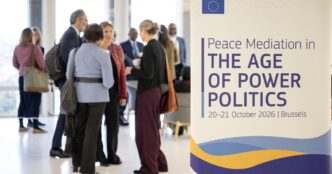
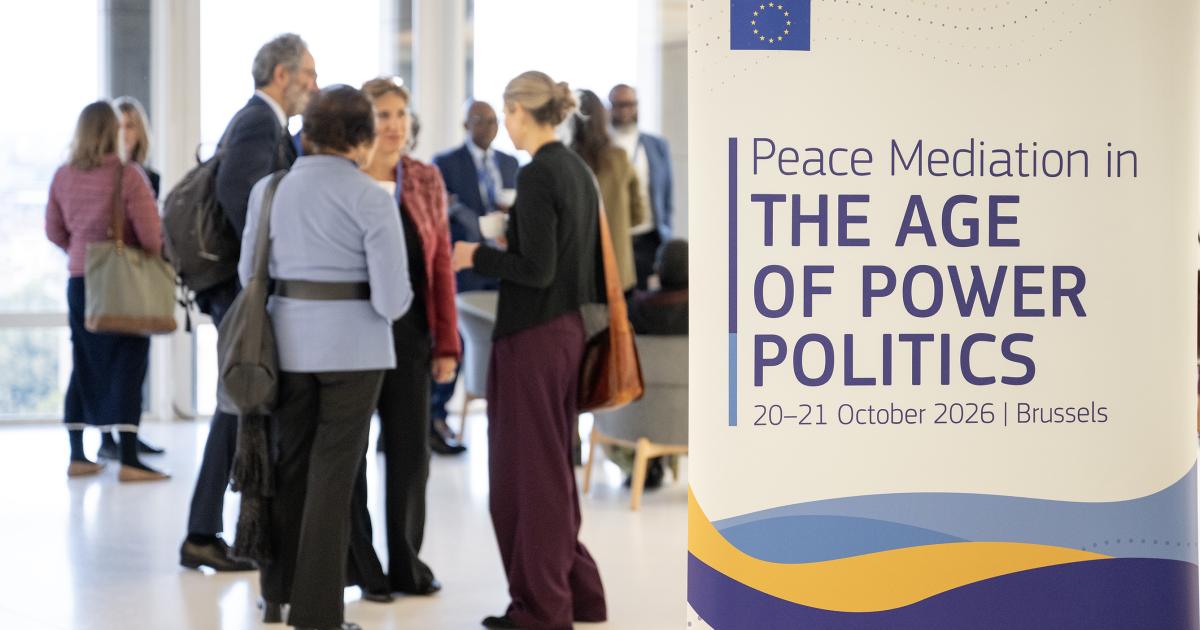
On 20-21 October, the 8th edition of the EU Community of Practice (CoP) on Peace Mediation took place in Brussels. The event brought together over 300 peace practitioners and policymakers from 60 countries. Its theme, “Peace Mediation in the Age of Power Politics,” put one question at the centre: how can mediation stay effective in a fragmented and unpredictable world?
The discussions addressed a wide range of challenges facing peace mediation, including ceasefire negotiations, maritime security and engagement with non-state armed actors.
Mediation and sustainable peace need to remain relevant. As geopolitical competition intensifies and the landscape is increasingly marked by a higher number of conflicts, long-term peace agreements are becoming more elusive and mediators face greater risks.
Linking ceasefire mediation to longer-term peace processes requires careful sequencing. Striking the right balance between immediate efforts to end hostilities and longer-term political objectives is essential to ensuring that ceasefire arrangements create opportunities for sustainable peace.
Shared maritime interests offer opportunities for dialogue amid geopolitical tensions. Shared interests in maintaining safe maritime routes, preserving global supply chains and protecting civilian crews offer opportunities for dialogue and cooperation. Strengthening partnerships, improving coordination between political and technical actors, and integrating mediation into maritime security efforts can contribute to building trust and preventing escalation.
Engaging non-state armed actors requires trust-building and locally grounded approaches. Effective engagement with non-state armed actors requires an understanding of their motivations and structures, identifying opportunities for dialogue and building trust over time. Drawing on local norms and involving communities can further contribute to de-escalation and create conditions for future peace processes.
Peace needs sustained investment. Across these different discussions, a common message emerged: defence and security efforts need to be complemented by long-term investment in peacebuilding and conflict prevention. Connecting formal negotiations, informal dialogue and grassroots initiatives was seen as key to building broad support and local ownership.
Strengthening the EU’s peace mediation network
Since its launch in 2019, the EU CoP has grown into a flagship event, providing a platform for dialogue, cooperation and critical reflection on issues in peace mediation and dialogue support. What began as a smaller circle of practitioners has evolved into a broad international platform connecting policymakers, mediators, civil society representatives and other peacebuilding actors. This year’s edition reflected this growing diversity, bringing together participants from a wide range of backgrounds.
The EU CoP is organised jointly by FPI and the EEAS, with active support from a Steering Group consisting of six leading peacebuilding organisations: the Berghof Foundation, CMI – Martti Ahtisaari Peace Foundation, Conciliation Resources, the European Institute of Peace (EIP), the European Peacebuilding Liaison Office (EPLO) and the HD – Centre for Humanitarian Dialogue.