

The Commission’s Joint Research Centre (JRC) published a new report Drought in East Africa, Middle East and Central Asia showing that 2021–2025 was the warmest five-year period on record since 1981 for these regions, with drought conditions driving soil moisture to historic lows. While irrigation has so far masked agricultural production in countries like Iran, Afghanistan and Uzbekistan, this buffer is increasingly fragile, with groundwater potentially being depleted faster than it can be replenished.
Five years of exceptional extremes
Drought events have been affecting East Africa and the Middle East/Central Asia severely, repeatedly, and persistently since 2021. The period between then and 2025 was the warmest 5-year stretch since 1981 for most of East Africa and parts of the Middle East/Central Asia, with the Horn of Africa and lowland areas of Iran, Turkmenistan, and Uzbekistan experiencing the most extreme temperature anomalies.
In East Africa, drought gripped Somalia, south-eastern Ethiopia and eastern Kenya, peaking in 2021–2022 and resuming as of 2024. The same years brought persistent dry conditions to northern Iran, the Turan Depression, Afghanistan and parts of Central Asia. Intense precipitation events hit alternatively these regions during this period.
Two natural climate large-scale mechanisms contributed to the precipitation deficit:
- the El Niño-Southern Oscillation, a periodic warming of Pacific Ocean surface waters that modifies rainfall patterns worldwide;
- the Indian Ocean Dipole which reduces East African rainfall when the western Indian Ocean runs warmer. Observations also point to a clear long-term trend towards drier conditions, likely linked to human-induced climate change.
Slight improvements and a conservative seasonal outlook
In East Africa, recent rains have eased short-term deficits, but longer-term shortfalls persist in eastern Somalia, western Eritrea and western Ethiopia. Soil moisture remains below normal across central Ethiopia, northern Eritrea, southern Somalia, north-eastern Kenya and southern Sudan.
Conditions are worse across the Middle East and Central Asia, where large parts of the region remain under long-term extreme drought, even if short-term indicators show some recent improvement. In March 2026, temperature anomalies reached 2.5°C above average in northern Iran, Turkmenistan and Uzbekistan. Soil moisture is good in some areas and poor in others. This variability is driven by snowmelt processes, accumulated rainfall deficits, and heavy reliance on irrigation.
Iran is increasingly depleting its groundwater, while Turkmenistan and Uzbekistan depend on two large transboundary rivers. Seasonal forecasts may bring some relief in the coming months, but the consequences of five years of drought are still unfolding.
Seasonal forecasts combining several modelling systems point to close-to-average conditions in East Africa and wetter-than-average conditions in the Middle East/Central Asia for April–June 2026. It is relevant to note that there is little rain in these regions in June, which means very small rain levels will be above the average. The Copernicus Climate Change Service points to warmer-than-usual conditions in both regions, with river-flow forecasts also pointing to flows above the average, except in Upper Nile tributaries and eastern Uzbekistan and Turkmenistan.
The map shows the total sum of the intensity of drought events between 2020 and 2025, highlighting the areas most critically affected by persistent and severe drought conditions. In the Middle East/Central Asia region, the most severe intensities form a broad, dark-red band stretching from northern and central Iran, up through Turkmenistan, northern Afghanistan, and parts of Uzbekistan and Tajikistan. In East Africa, extreme drought intensities are deeply concentrated over the Horn of Africa, particularly devastating southern Somalia, western Ethiopia, and eastern Kenya.
Impacts on agriculture and food security
Although seasonal forecasts suggest some relief in 2026 in the drought situation across these regions, conditions remain severe and the humanitarian consequences of five years of drought are still unfolding.
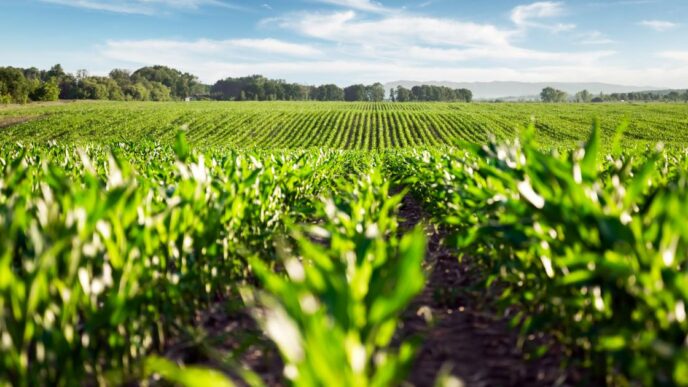
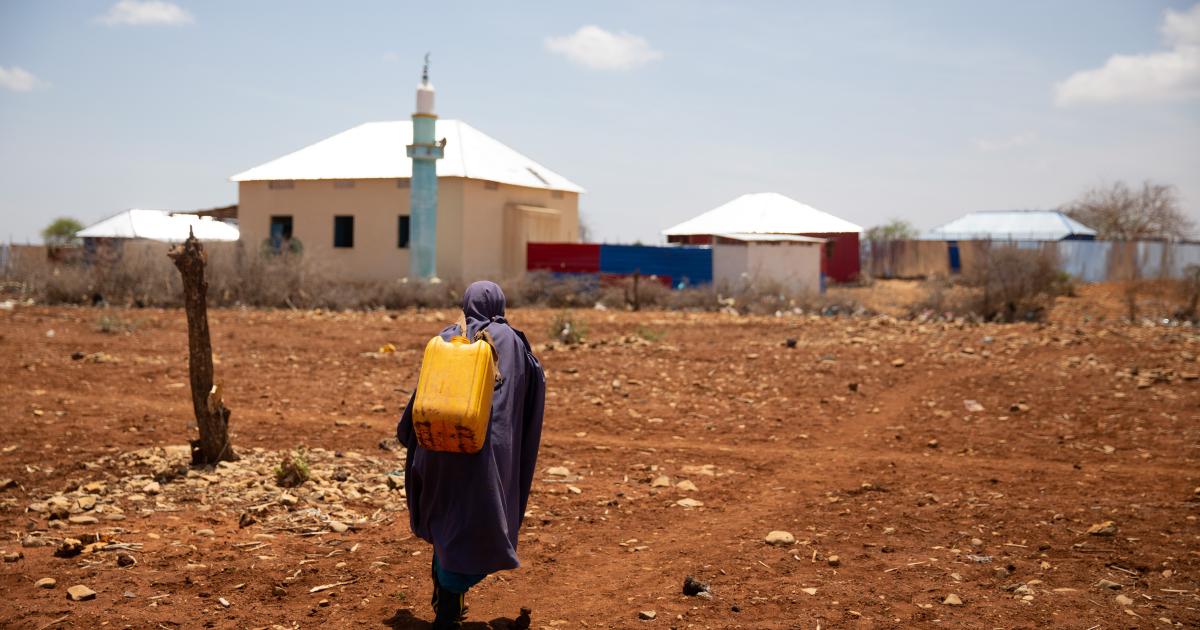
Drought has been disrupting crop production across East Africa and Central Asia, with sorghum production dropping by around 40% in Somalia. In January 2026, most Deyr-season crops in Somalia failed completely, and pastoral vegetation in the south is rapidly degrading.
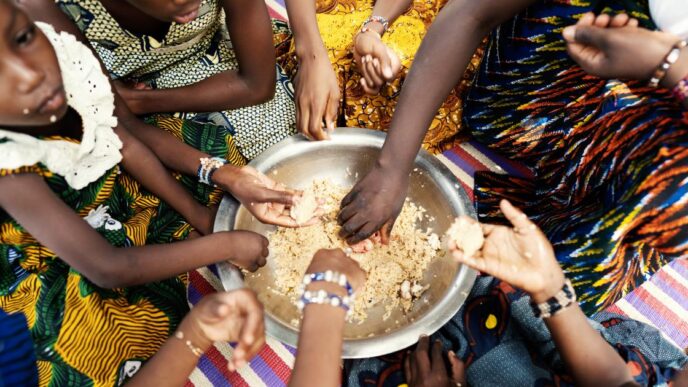
The JRC report also highlights that 1.8 million people face food insecurity in arid and semi-arid lands in Kenya, while Ethiopia has activated its Drought Early Action Protocol following more than halved crop yield. The severe drought has also affected 3.4 million people across 12 provinces of Afghanistan in 2025, and Iran is facing a worsening water crisis, losing 1.7 billion cubic metres of groundwater each year.
Coordinated humanitarian and water-management measures will be essential to limit further impacts in the months ahead. The EU has committed €63 million in humanitarian funding to Somalia in 2026 and €79.4 million to Ethiopia in 2025, mostly covering food supplies and emergency assistance.