


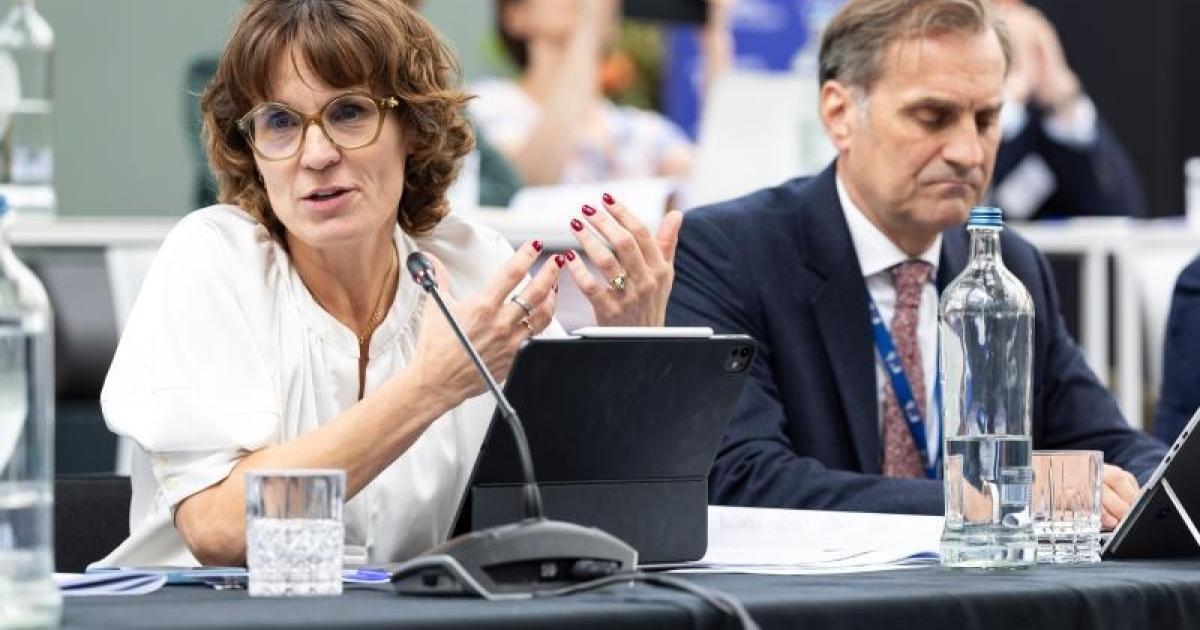
Today (5 Oct), in Berlin, Jessika Roswall, Commissioner for Environment, Water Resilience and a Competitive Circular Economy and Carsten Schneider, Germany’s Federal Minister for the Environment, Climate Action, Nature Conservation and Nuclear Safety, signed a joint statement on strengthening water resilience in Germany.
The signing comes just weeks after Commission President von der Leyen again emphasised the EU’s commitment to water resilience in her State of the European Union address.
The joint statement sets out how Germany, building on its National Water Strategy, will boost efforts to restore and protect the water cycle, build a more water-smart economy, and ensure safe, affordable access to water and sanitation. It also highlights how the Commission will be supporting these efforts.
Germany is the first country to conclude a structured dialogue process, which the Commission started in November 2025 and will gradually involve all Member States.
“Today marks an important moment in Europe’s fight against water scarcity — getting forward to water resilience, with both the EU and Germany committing to urgent action. Together we have named the challenges, discussed all possible solutions, and produced an improvement plan that will contribute to sufficient and better-quality water for people, businesses, and nature.”
Jessika Roswall, Commissioner for Environment, Water Resilience and a Competitive Circular Economy
Addressing water pollution is a top priority, with measures included to reduce legacy mining pollution and to support the transition to sustainable agriculture. Germany will also work to boost natural water retention, keep water abstraction at sustainable levels, improve water efficiency, and secure better control of water resources.
Work with the Federal States will accelerate to better prepare for future occurrences of water scarcity and drought.
Germany will also continue to implement EU water legislation, and where needed, upgrade existing water treatment plants with an additional pollutant removal stage. These upgrades will help filter out pharmaceutical residues, pesticides, PFAS and other micropollutants that current treatment facilities are not equipped to remove effectively.
Other steps include enhancing the efforts to restore aquatic ecosystems, identifying the main risks to water quality in drinking water catchment areas, as well as a commitment to take stronger preventive measures to reduce those risks. Efforts will also be made to upskill and support municipalities and local-level actors.
The Commission, through various actions under the European Water Resilience Strategy, will support Germany’s efforts in areas such as boosting research and innovation, accelerating digitalisation, enhancing skills, and facilitating public and private investments in green-blue infrastructure.
The joint statement is a result of the Commission services’ assessment of the third River Basin Management Plans, the second Flood Risk Management Plans, and in-depth discussions at the technical level where several areas for accelerated implementation and improvement were identified.
Background
The Commission is stepping up efforts to ensure that the Water Resilience Strategy is implemented effectively and fairly across the EU and that no community is left behind.
Achieving Europe’s water resilience objectives by 2050 will require transformational change at every level. To this end, EU countries, cities and regions will all have a key role to play, alongside businesses, academia, young people, civil society and financial organisations.
Europe’s strongest path forward remains the full implementation of the EU’s water legislation and the Water Resilience Strategy. This year’s extreme heatwaves underlined the urgency of stronger action on water resilience in Germany, amid reports of high numbers of heat-related deaths, supply chain disruptions, crop failures and unprecedented forest fires.
More information
Water Resilience Strategy | European Commission
Water Resilience Strategy Action Tracker | European Commission