

Why this conversation matters
Europe’s space sector is at a turning point. Public investment reached EUR 13.5 billion in 2025, yet Europe’s share of global public space spending fell from 15% to 11% over five years. EU space companies raised EUR 1.3 billion in venture capital in 2025 — around 10% of the global total — but the late-stage financing gap remains acute. Scaling companies is now as important as starting them.
Sustainable finance could help close that gap. But for it to reach the space sector in a meaningful way, the frameworks must reflect the sector’s realities: long development cycles, high upfront costs, uncertain demand, and very different risk profiles across the value chain.
A dual sustainability dimension
A core insight from the workshop is that space sustainability has two distinct dimensions. The first is the environmental footprint of space activities themselves — from manufacturing and launch to end-of-life and debris. The second is the contribution of space data and services to sustainability goals on Earth, from climate monitoring to resource management. Any framework must address both.
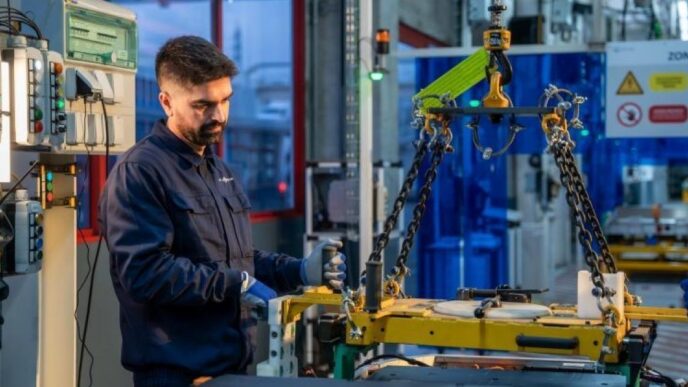
Speakers agreed that most of the sector’s environmental impact lies upstream, in manufacturing and the supply chain — where data remains scarce. Green capital already flows to downstream space applications, but far less to the launch, satellite and ground infrastructure that makes them possible.
What needs to happen
Three themes emerged across the panels:
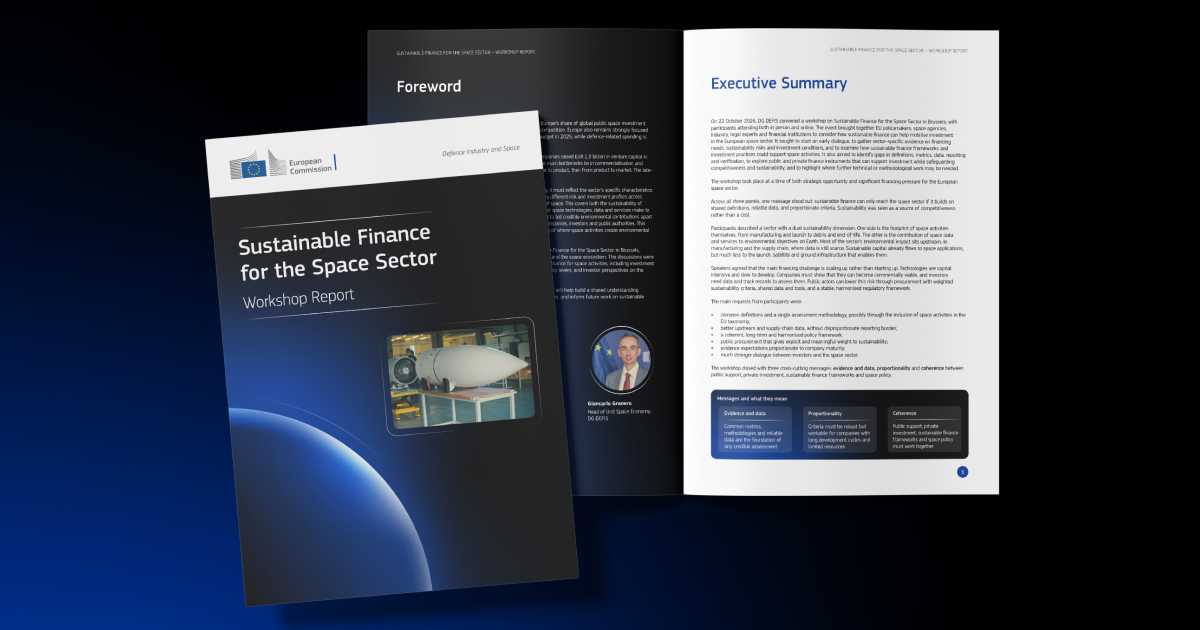
Evidence and data. Common metrics, life-cycle assessment methods, and reliable data are the foundation of any credible approach. Missing data should not justify delay — an imperfect start is better than waiting. But what companies are asked to report must bring real value, not just administrative burden.
Proportionality. Criteria must be robust but workable, especially for SMEs and companies with long development timelines. Sustainability evidence expectations should be proportionate to company maturity.
Coherence. Public support, private investment, sustainable finance frameworks and space policy must work together. Frequent regulatory changes create uncertainty. A stable, long-term and harmonised framework is essential.
The path forward
The workshop was the beginning of a conversation. The European Commission will continue this work with space agencies, industry, investors and financial institutions as the sustainable finance framework advances