

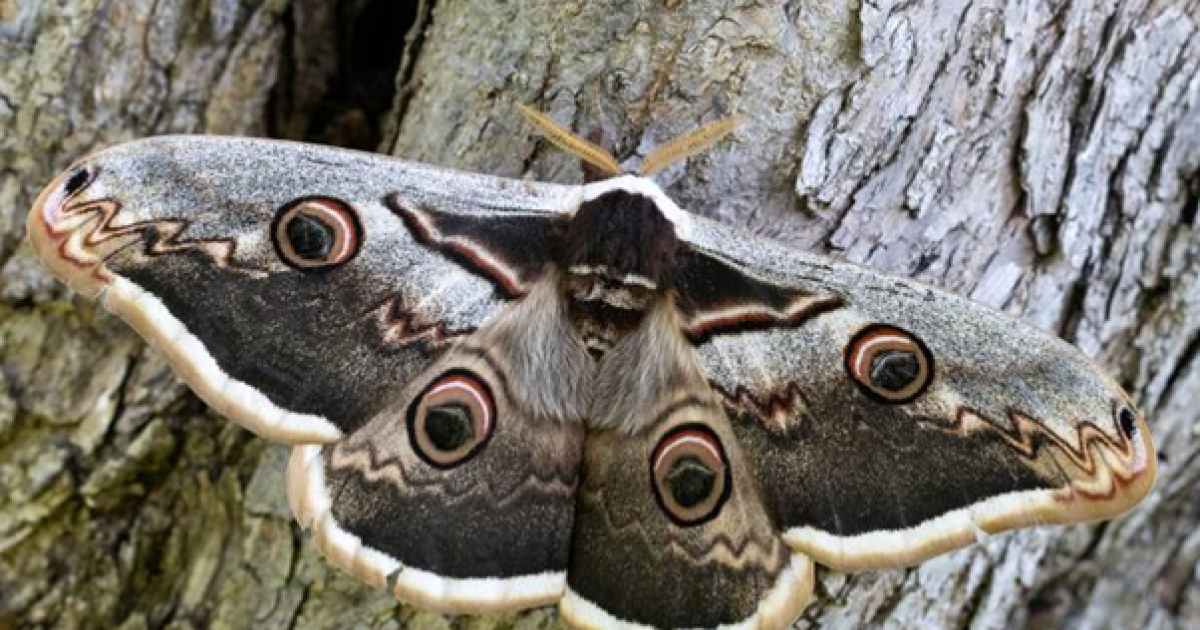
The newly released European Red List of Moths provides the first comprehensive assessment of moths’ extinction risk across Europe. The report shows that moths, an important but often overlooked group of pollinators, are under growing pressure.
Nearly 11% of species in Europe (nearly 12% in the EU27) are threatened with extinction. For a further 1 in 4 species, data is lacking, highlighting major gaps in knowledge about their distribution, ecology and population trends.
The report’s publication means all four pollinator groups covered by the EU Pollinators Initiative — bees, butterflies, hoverflies and moths — have now been assessed for extinction risk.
Worrying picture calls for more efforts to protect & restore habitats
The results show that while most assessed species are currently classified as ‘Least Concern’, the overall picture is worrying
Around 35% of endemic species assessed at European level are ‘Data Deficient’, meaning their true extinction risk may be higher than currently known. One species, Eupithecia ogilviata from the Azores, is assessed as ‘Extinct’, and several others are considered ‘Critically Endangered’ (‘Possibly Extinct’).
The main pressures identified are habitat modification and degradation, followed by climate change, and pressures linked to intensive agriculture. Urban development, pollution, habitat fragmentation, pesticide use, landscape simplification and artificial light at night also affect many species.
The findings point to clear priorities for action:
- Protect, restore and reconnect habitats
- Promote sustainable land use
- Reduce pressures, such as pollution and artificial light at night
- Strengthen monitoring and data collection, especially in under-recorded regions
They also highlight the need for more research on threatened and ‘Data Deficient’ species, including through the EU Pollinator Monitoring Scheme.
Methodology
The assessment covers 3,082 moth species at the European level, including 704 endemic species, and 2,828 species in the EU27, including 488 endemics. It focuses mainly on macro-moths across 23 families and applies the IUCN Red List Categories and Criteria to evaluate species’ conservation status.
The study draws on one of the largest assembled datasets on European moth distributions presented alongside the publication ‘European moths: Moving from assessment to conservation planning‘, which helps translate the findings into practical conservation priorities.
Together, the two publications provide a strong evidence base to support implementation of the EU Biodiversity Strategy for 2030, the EU Pollinators Initiative and the Nature Restoration Regulation, including measures to reverse pollinator decline and improve the conservation status of moths across Europe.
More information
European Red List of Moths | Publications Office of the EU
‘European moths: Moving from assessment to conservation planning’ | Publications Office of the EU