

In the face of climate change, increases in large-scale disturbances – like bark beetle outbreaks and trees being uprooted by wind – are reshaping European forest ecosystems. These events offer both challenges and opportunities for biodiversity. Understanding how declining bird species respond to such disturbances, and how management interventions like salvage logging or underplanting influence those responses, is critical for designing resilient and biodiversity-friendly forest policies.
Many forest-dwelling species, including some which are in decline, depend on natural disturbance. The gaps introduce more sunlight to the forest floor, create more deadwood-rich habitats and fresh opportunities for breeding, nesting, roosting, feeding, sheltering and space for new life to grow.
However, over the past 200 years, many species including birds that rely on these more open woodland habitats have declined due to past forest management, which saw lower harvest rates, less coppicing and less wood pasture, replaced by more dense and uniform canopy cover and less mixed habitat.
Researchers in Germany conducted a large-scale, field-based study in the country’s Harz National Park, where spruce had been affected by bark beetle outbreaks in recent years. They assessed how different bird species responded to natural forest disturbances and associated management practices. They surveyed 182 forest plots with varying histories of disturbance and management, analysing how factors such as salvage logging and beech underplanting shaped bird communities. They found that forest disturbance benefitted bird diversity, but management choices determined which species would win or lose.
To reach these conclusions, the researchers estimated bird species abundance using distance sampling methods which categorised plots by the types of disturbance present (bark beetle or wind), pre-disturbance management (beech underplanting or not), and post-disturbance response (salvage logging or not). They calculated biodiversity and analysed the presence of key indicator species of healthy forests, and built a picture of bird community structure. Among their findings:
- Disturbance increased bird diversity in and around spruce monocultures where tree species diversity tended to be low.
- Forest management influenced bird population composition, although overall biodiversity was similar across different management types.
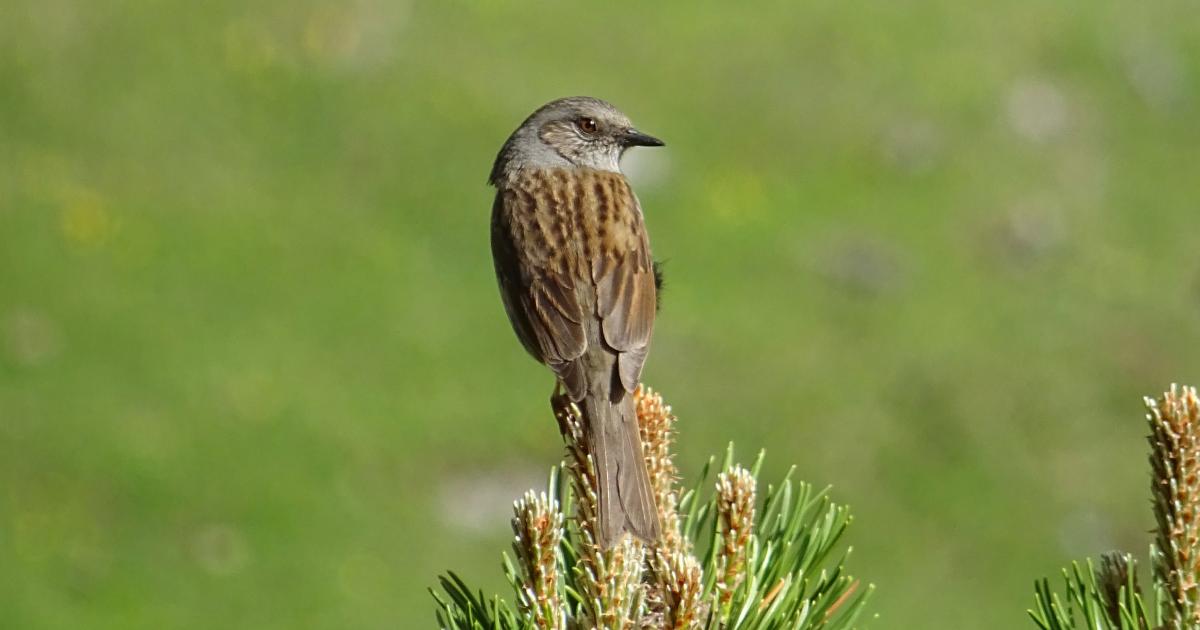
- Shrub-associated birds such as dunnock and willow warbler thrived where beech had been underplanted before disturbance.
- Farmland, hedgerow, heathland and open-habitat-preferring birds such as meadow pipit and yellowhammer favoured salvage-logged sites.
- Forest specialists such as goldcrest and coal tit, which depend on mature conifers, were more abundant in undisturbed spruce stands and less able to recolonise disturbed areas.
- Species-specific responses dominated. No one-size-fits-all pattern emerged in response to pre- or post-disturbance management. Responses depended on each species habitat preferences and nesting behaviours. This complexity underscored the importance of flexible, targeted management strategies.
The findings showed that traditional salvage logging, a post-disturbance activity widely practised to generate economic value from dead timber could favour open-habitat and farmland bird species. Forest areas with no intervention (mainly within the National Park boundary in this study) retained deadwood and had a more complex mixed vegetation structure. The researchers suggested that combining varied management strategies – including underplanting with native broadleaf species, selective salvage logging, and preserving some non-logged stands – could support a greater range of habitats in a landscape which, in turn, could support broader species biodiversity goals.
These findings are particularly relevant for European policymakers, conservationists and land managers navigating the transition away from conifer-dominated plantations towards more structurally and ecologically diverse forests.
This research supports a shift away from uniform forestry towards more adaptive, conservation-informed forest management when responding to disturbance. This includes reconsidering where and when salvage logging is undertaken; considering balance between encouraging conifer-dependent and old-growth dependent species, and species that respond well to forest disturbance; and considering no-intervention management in areas outside national parks (in the German context). As forest disturbances become more frequent and severe under climate change, understanding how management interventions shape biodiversity is crucial to supporting forest resilience.
Reference:
Graser, A.; Georg, M.; Kallmayer, J.; Marten, A.; Pertl, C.; Rumpf, H.; Senf, C. and Kamp, J. (2025) Large-scale forest disturbance and associated management shape bird communities in Central European spruce forests. Journal of Applied Ecology 2025 (62): 329–343. https://besjournals.onlinelibrary.wiley.com/doi/full/10.1111/1365-2664.14849