

Today, the European Commission is establishing the PreparEU Advisory Group, tasked with providing strategic advice to President of the Commission, Ursula von der Leyen, and Commissioner for Equality, Preparedness and Crisis Management Hadja Lahbib on how to best address accelerating disaster risks, including extreme weather events and wildfires.
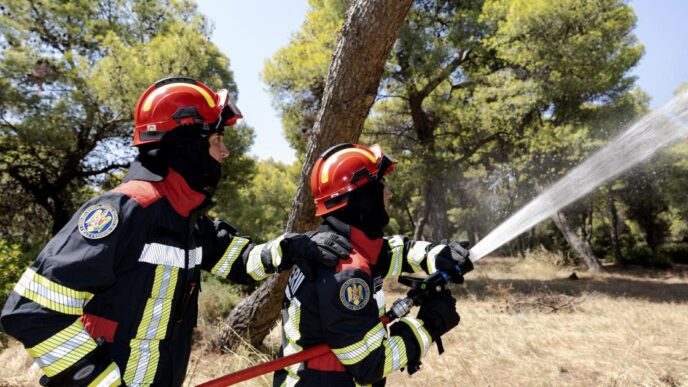
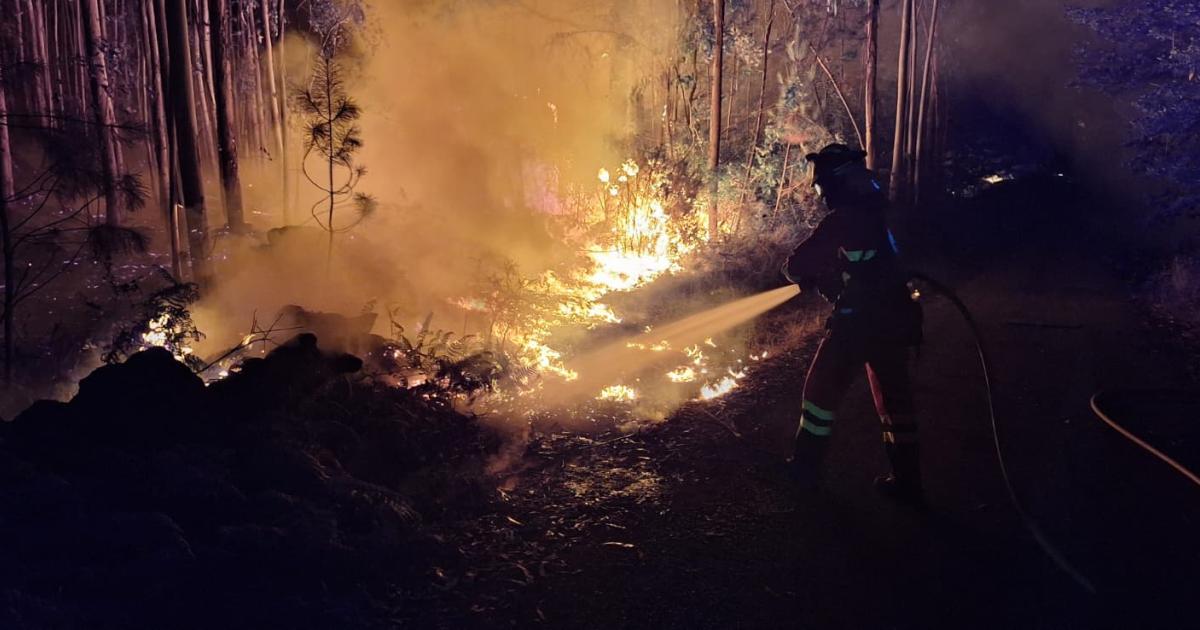
The exceptional is no longer exceptional. We must prepare for everything. This summer, Europe fought raging wildfires together through our Union Civil Protection Mechanism. In Belgium, France, Spain, Serbia and beyond, planes crossed borders and European firefighters worked side by side with local crews to save lives. The best fire is the one that never starts. The PreparEU group will bring together senior crisis-management experts, backed by scientists, to help us prepare for the full range of risks Europe faces. They will deliver concrete recommendations, including for a possible European Firefighting Fleet. We are delivering to keep every European safe.
The Group was announced by President von der Leyen in her State of the Union speech of 16 September 2026. It will be composed of 11 senior experts with a background in EU civil protection and crisis management and 6 scientists and academics, from different EU Member States.
The Advisory Group will look at the existing capacities of EU Member States under the EU Civil Protection Mechanism and rescEU. It will examine the immediate and longer-term impact of natural hazards such as extreme weather and wildfires, technological and other emerging risks and threats, as well as their possible effects on mass movements, emergency health, shelter, communications and the management of consequences arising from critical infrastructure disruption. The Group will discuss prevention and preparedness in the context of the rapidly evolving risk landscape, possible development of new capabilities, including regarding dual use assets and the European Firefighting Fleet.
The Group will hold its first meeting in early November 2026 with the goal of presenting its recommendations to President von der Leyen and Commissioner Lahbib by spring 2027.
The group’s secretariat will be based in Brussels and hosted by the Commission’s Directorate-General for European Civil Protection and Humanitarian Aid Operations.
Background
Europe faces an increasingly complex risk landscape, where natural disasters, climate-related hazards, health emergencies and other crises can have far-reaching and cascading effects across borders and sectors. Addressing these challenges requires moving beyond reactive and hazard-specific responses towards a more proactive and integrated all-hazards approach, with a stronger focus on prevention and preparedness. This is at the heart of the EU Preparedness Union Strategy, which aims to strengthen Europe’s resilience to crises through closer cooperation, better coordination and the involvement of all levels of government and society.
With wildfire risks rising across Europe, a record number of firefighters, aircraft and emergency experts were deployed this summer to help protect lives, homes and nature. Even with solid preparedness measures in place, this year again our continent was not spared, with wildfires devouring parts of Europe from the Netherlands, Belgium and Czechia to Greece, France, Spain, Portugal and Serbia. Over 686,000 hectares were burnt. Some 12 million tonnes of crops were lost. This year, the EU Civil Protection Mechanism was activated for wildfires 10 times over the summer for Europe, and twice outside Europe. 41 aerial firefighting assets and 18 ground firefighting teams were deployed.
The EU is also strengthening its approach to integrated wildfire risk management. Presented in March 2026, the Commission’s Communication recognises wildfires must be addressed across the full disaster management cycle – from prevention and preparedness to response and recovery. The EU is investing billions of euros across different programmes to support climate adaptation, forest resilience, prevention infrastructure and disaster risk management. These projects help countries strengthen risk assessment, improve preparedness planning and build long-term resilience against wildfires.
This Communication is expected to be complemented by a new framework for climate resilience in October 2026 and a European Heatwave Plan planned for adoption in 2027.