

Denmark and Luxembourg have revised their use of ETS flexibility under the Effort Sharing Regulation and will not cancel any ETS allowances between 2026 and 2030. The Commission has updated Implementing Decision (EU) 2020/2126 to reflect these changes.
carbon neutrality
21 posts
The Commission announced in its European Steel and Metals Action Plan an initiative that aims at extending the carbon border adjustment mechanism (CBAM) scope to some downstream products to reduce the risk of carbon leakage.


The European Commission welcomes the provisional political agreement reached between the European Parliament and the Council today on the Commission proposal to simplify and strengthen the EU’s carbon border adjustment mechanism (CBAM).
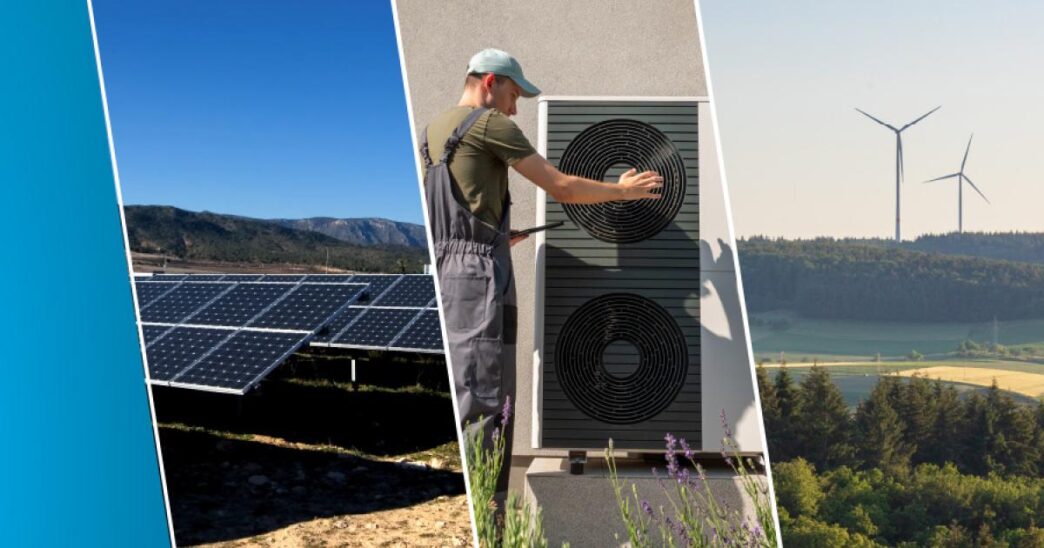
In 2015, the EU’s energy union strategy set out a bold vision to fundamentally transform our energy system. It envisioned a resilient energy union, with an ambitious climate policy, to deliver secure, sustainable, competitive and affordable energy for all Europeans.


The EU adopts new rules aligning aviation emissions monitoring with CORSIA, ensuring EEA-based operators offset international flight emissions for 2021–2026. The act supports sustainable aviation and reinforces the EU’s climate commitments under the revised ETS Directive.
The EU has identified 44 oil and gas companies to help deliver 50 million tonnes of annual CO₂ storage by 2030. This move supports the Clean Industrial Deal and marks a key step in scaling up carbon management to decarbonise Europe’s most emissions-intensive sectors.
The 2024 Innovation Fund calls drew 373 project proposals for net-zero tech and EV battery manufacturing, showing strong EU industry commitment to climate goals. Up to €3.4 billion in funding will support Europe’s clean, competitive, and resilient future.
The European Commission has welcomed an agreement at the International Maritime Organisation (IMO), as a meaningful step towards achieving net-zero greenhouse gas (GHG) emissions from global shipping by 2050.

The EU is investing €86 million in several projects in the EU and Iceland that will work on water quality and availability, cleaning up polluted rivers, improving fire and flood protection, and reducing greenhouse gas emissions. Their work will help Europe become a climate-neutral continent by 2050.
The European Commission welcomes agreement at the International Maritime Organisation (IMO), as a meaningful step towards achieving net-zero greenhouse gas (GHG) emissions from global shipping by 2050.