

This International Translation Day, discover the diverse community of language professionals at DG Translation. Through a combination of linguistic expertise, subject knowledge and technology, they help to make EU legislation, policies and information available in all 24 EU official languages.
A profession with many faces
Translation at the European Commission involves a wide range of skills and roles, from translating and editing texts to researching terminology and developing language technologies.
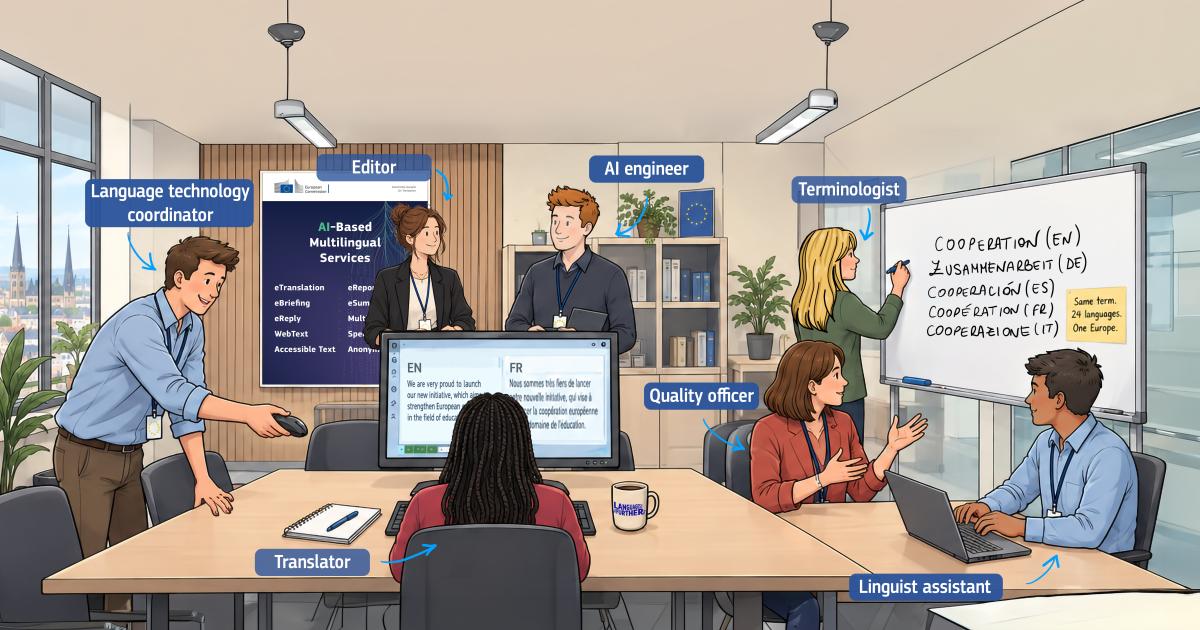
These are some of roles that help make multilingual Europe possible:
Translators are at the heart of DG Translation’s work. They translate EU legislation, policy papers and a wide range of legal, financial, scientific and technical texts. They also revise translations, work on terminology and adapt communication materials to local settings.
Editors help make Commission texts clear, accurate and consistent. They work on policy documents, legal acts and web pages, advise colleagues on drafting and provide training and practical guidance on clear language.
Terminologists make sure the right terms are used consistently. They research specialised terminology, develop and validate terminology records in IATE (the EU’s multilingual terminology database) and advise colleagues on terminology and information sources.
Quality officers help maintain high standards across translation work. They monitor and evaluate translations, develop tools and share good practices.
Language officers connect DG Translation with people in EU countries. Based in the Commission’s local offices, they combine translation with communication, outreach and networking. They work with universities, schools, language organisations and local communities.
Language technology coordinators bring language expertise and technology together. They support colleagues with translation tools, machine translation and AI, test and improve language applications, and share new developments and good practices.
AI engineers develop and improve the technology behind language services. They work on tools including machine translation and speech and text analysis, while providing technical support to colleagues and users.
Prompt engineering specialists help colleagues identify when and how to use AI effectively. They design and test prompts and AI-based workflows, and advise colleagues on their use.