


UNESCO and the European Union work hand in hand to promote information integrity, freedom of expression and resilient information ecosystems across the Mediterranean, as growing geopolitical tensions and rapid technological change reshape the region’s information environment.
The Mediterranean region is a shared space connecting Europe, North Africa and the Middle East, shaped by exceptional cultural and linguistic diversity, rich historical heritage, and longstanding traditions of exchange and dialogue. Its interconnected societies, vibrant media and cultural spheres, , and growing digital connectivity provide important foundations for cooperation, mutual understanding and resilience.
Yet these strengths are increasingly being tested. Conflicts, geopolitical tensions, population movements and fragile political transitions are creating fertile ground for disinformation and hate speech campaigns. Fragmented media ecosystems, the growing dominance of social media and unequal access to reliable and verified information can heighten vulnerability to information disorders, erode public trust and deepen social divisions.
These challenges are being accelerated by rapidly evolving technologies. Against this backdrop, information integrity is increasingly a cornerstone of regional resilience, social cohesion and stability.
A shared UNESCO–EU agenda for the Mediterranean
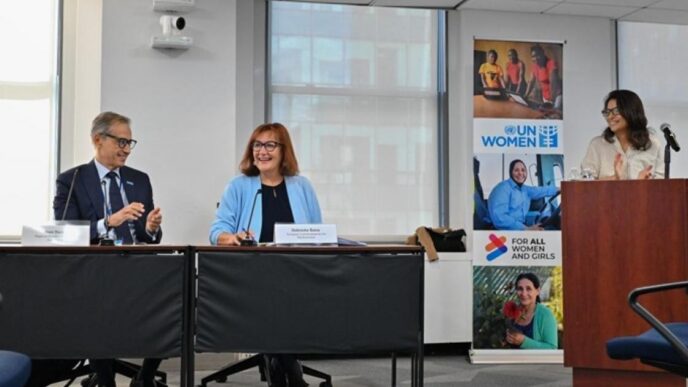
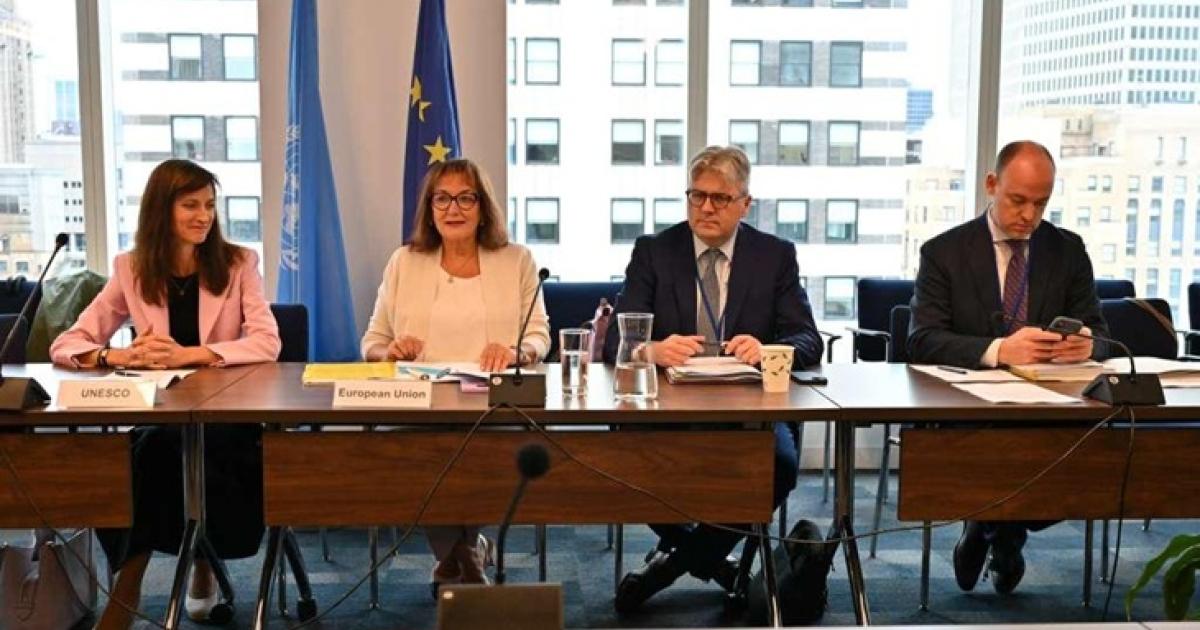
On 22 September, during the UN General Assembly’s High-Level Week in New York, UNESCO and the European Union convened a high-level side event to examine how international and regional cooperation can advance information integrity in the Mediterranean while addressing the growing challenges posed by disinformation and hate speech.
The discussion brought together:
- Dubravka Šuica, European Commissioner for the Mediterranean, European Union
- Mariya Gabriel, Assistant Director-General for Communication and Information, UNESCO
Speakers underlined the essential role of independent journalism, freedom of expression and access to reliable and verified information in building resilient societies, strengthening public trust and fostering regional cooperation.
The discussion also pointed to strong potential synergies between the European Union’s Pact for the Mediterranean and UNESCO’s normative frameworks and technical expertise in information integrity, digital platform governance and media and information literacy (MIL), notably through UNESCO’s Internet for Trust initiative.
“Information integrity is not just a media issue; it is also a matter of peace, security and sustainability. Our Pact for the Mediterranean, which includes our southern partners, supports media and information literacy, including young journalists. Our shared EU-UNESCO vision for the Mediterranean means we support societies to remain informed, open and inclusive – this is needed now more than ever” said Dubravka Šuica, European Commissioner for the Mediterranean.”
“Responses to the challenges to information integrity cannot be designed at the global level alone. Since 2023, thanks to the support from the EU, UNESCO has built coalitions of governments, regulators, media, civil society, academia and citizens to exchange experiences and develop responses grounded in global principles, knowledge and local realities,” said Mariya Gabriel, UNESCO’s Assistant Director-General for Communication and Information.
Pact for the Mediterranean
Pact for the Mediterranean, launched in November 2025 by the EU and southern Mediterranean partners, provides an important policy and cooperation framework to support a more resilient Mediterranean information space, including by fostering an enabling environment for independent media organisations and by strengthening networks of journalists, fact-checkers and content creators committed to trustworthy, pluralistic and high-quality information.
From global principles to regional action
Cooperation between the European Union and UNESCO is already well established at the global level, providing a strong foundation for deeper collaboration in the Mediterranean.
Since 2023, the EU has supported UNESCO’s Internet for Trust initiative, which has broadened the range of voices contributing to global policy discussions and brought regional perspectives and expertise from the Global South into international debates.
The initiative has also contributed to global policy frameworks, including the UN Global Principles for Information Integrity and the UN Global Digital Compact, while supporting regional organizations such as the African Union and ASEAN in developing digital policies that protect freedom of expression and access to information.
Importantly, Internet for Trust has helped build a growing ecosystem of regulators, civil society organizations, media, academia and digital platforms at global, regional and national levels. These networks are helping translate shared principles into action grounded in local realities.
More information: