

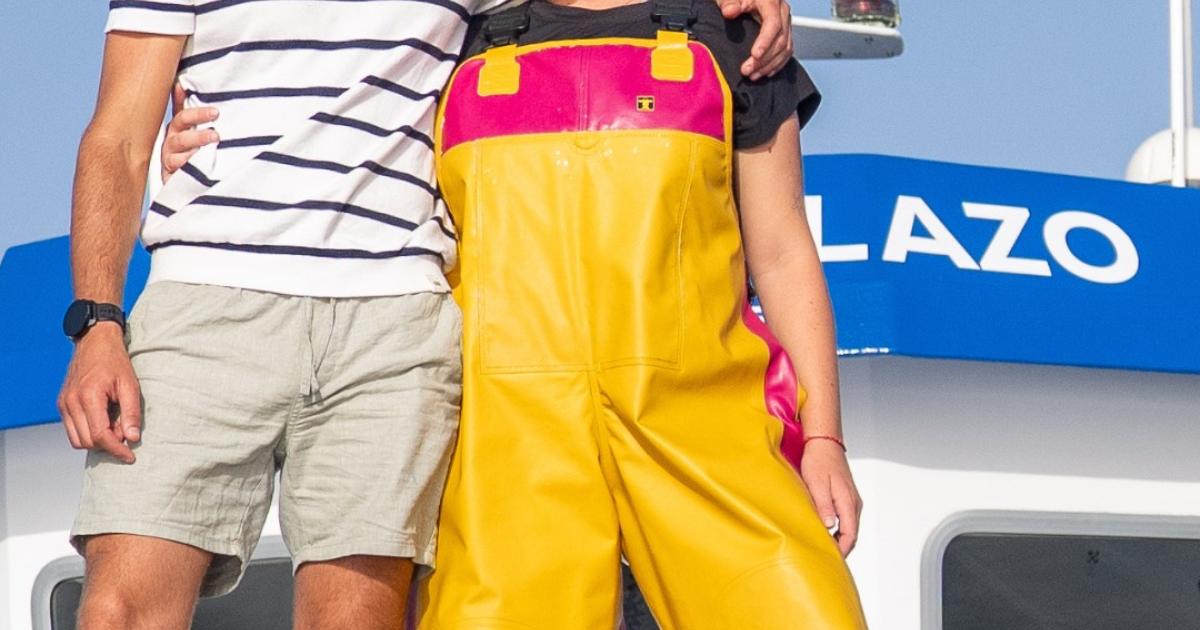
Maria Teresa (26) and her brother Gabriel (30) are proving that the future of fishing can be safer, smarter and more sustainable. When their parents decided to stop fishing, the siblings wanted to continue their family tradition. But they agreed that their vessel, Dolores Lazo, was due for a refresh to match the needs of the crew. With EU support, they modernised the vessel for safety, hygiene and comfort – helping a new generation confidently step into a traditional trade.
Family tradition breaking the stereotypes
Based in Caleta de Vélez, the largest port in the province of Málaga, the 20-metre purse seiner Dolores Lazo has charted the local waters for more than 30 years. Passed down through two generations in the family, it is now in the hands of Maria Teresa and Gabriel. “Our parents wanted us to do something else,” says Maria Teresa. “But we felt a strong urge to honour our family’s fishing heritage”, adds Gabriel.
In a sector where women are under-represented at sea, the siblings charted a different course. While Gabriel took over from their mother to handle administration and sales, Maria Teresa always dreamed of becoming a skipper. And as she says, “Being at sea is what I like the most, for me it is not a job”. After seven years of being a crew member, that ambition has only grown, and when she is not out fishing, she is training to obtain her skipper’s certificate.
A picture of the crew, with a few members missing © Gabriel Pastor Sánchez
A young crew: a secure future
Generational renewal is a pressing challenge in the European fisheries sector, yet on Dolores Lazo, it is becoming an asset. With half the crew under 30, experienced hands pass skills to new ones, in a setting designed to keep people safe, rested and proud of their work.
Each week one crew member stays ashore. With 11 crew members but only 10 needed on board, each person gets a paid week of leave roughly every two and a half months. This predictable scheduled time off helps retain young talent and it supports the crews’ family life at home.
The siblings understand the needs of the new generations, and they know that being at sea can be tough and a safe working environment is essential to attract young fishers. Flexibility, freedom, safety and better working conditions were on their horizon, and with EU-funding, they were able to achieve it all. From upgraded lifejackets and safety gear to renewed electrical installations, structural renovations and installation of a modern bathroom and kitchen on the boat.
Maria Teresa carrying boxes in the port © Gabriel Pastor Sánchez
Giving back as a new vision for the future of fisheries
The siblings also bring a fresh mindset to the world of fisheries.
They want to ensure that the value of their efforts comes back to the fishers and the sea. In the future, they hope to sell their catch directly to buyers who place orders in advance via their website. This way, the crew only catch what is ordered – reducing steps in the supply chain and allowing more competitive sale prices. The result? Fewer hours at sea, lower fuel use and less pressure on stocks, while customers get fresher fish and clearer product traceability. Not to mention, the crew benefits from a better work-life balance as it could mean more efficient days at sea.
Maria Teresa and Gabriel have also created a social initiative called “SOMOS MAR” (translated: We are the ocean) through which they invest 5-10 % of their net earnings back into the sea, for instance by cleaning up marine litter or the port.
Have a look at their website to learn more about their vision, their catches and the crew.