

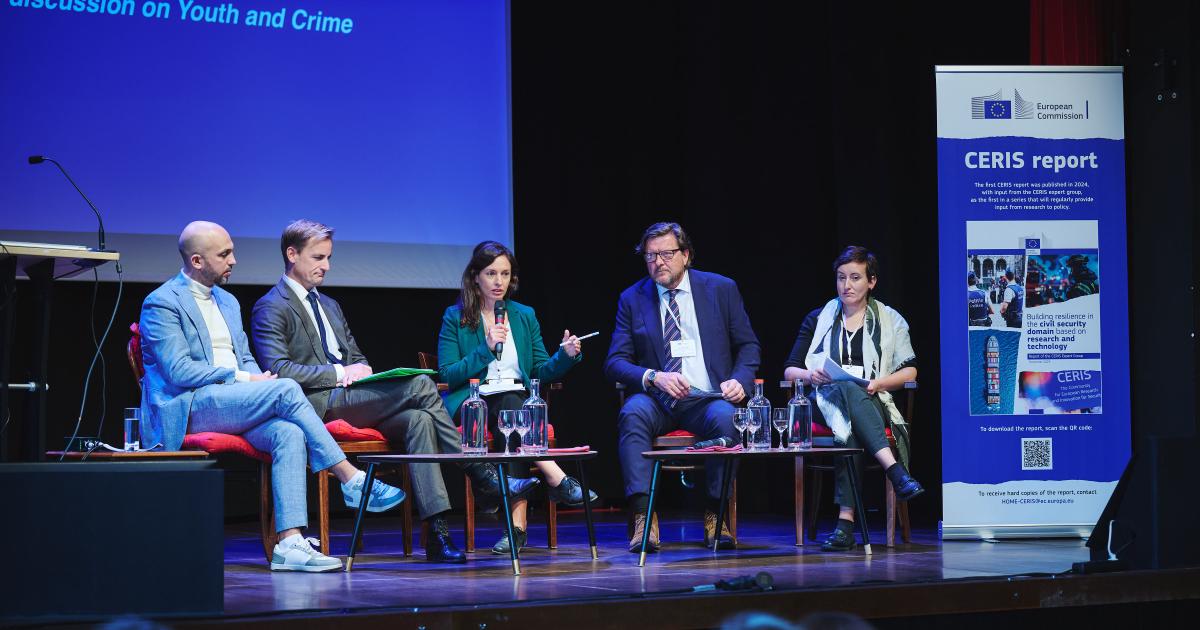
The European Commission and the Community for European Research and Innovation for Security (CERIS) held a far-reaching workshop on 30 September and 1 October in Brussels. The event focused on youth involvement in crime, addressing concerns such as cybercriminal activities and gang-related offences.
Alarming statistics and legislative actions
Europol‘s statistics revealed that 70% of criminal markets involve minors, often recruited through digital platforms. This underlines the urgent need for stronger protective measures to safeguard young people from exploitation online.
The workshop emphasised the Digital Services Act (DSA), implemented in 2024, which mandates platforms to assess risks and adopt protective measures for minors. This legislation, along with ongoing revisions to the Victims’ Rights Directive, demonstrates the Commission’s commitment to enhancing protections, especially for minors. Initiatives like the “Eyes Open” campaign, which will be expanded in 2026, were highlighted for their role in raising awareness.
Enhancing training for security practitioners
The workshop also provided a platform to explore ways to improve training for security professionals. Discussions centred on the current training landscape and showcased tools and projects that support practitioners on the front lines. The need for modular and adaptable training methods was underscored as crucial for keeping pace with evolving technological and criminal challenges.
Speakers, including Martina Maiello from the Commission and Maria João Guia from CEPOL, emphasised integrating new technologies and comprehensive training to equip practitioners against emerging threats.
Innovative solutions and projects
The event featured demonstrations of innovative solutions from EU and non-EU funded projects. Projects like ENACT and CESIUM enhance public safety through real-time data analysis and advanced child risk visualisation. RAYUELA, another significant project, uses educational gaming to engage youth and raise awareness about online dangers. Tools like those developed in the GEMS project, which counter radicalisation through gaming, and KOBAN, which fosters community policing, were also highlighted for their effectiveness.
Strategic action points
The workshop concluded with several strategic action points to bolster efforts against youth-related criminality:
- Digital platform compliance: Ensure digital platforms comply with risk management and protective measures for minors to create safer online spaces.
- Victims’ rights and awareness: Fortify frameworks for victims’ rights, especially for children, and broaden public awareness initiatives like the “Eyes Open” campaign.
- Community partnerships: Promote partnerships between community stakeholders and law enforcement to offer alternative paths for at-risk youth.
- Continuous training updates: Continuously update law enforcement training with the latest research and technologies to ensure readiness for new crime trends.