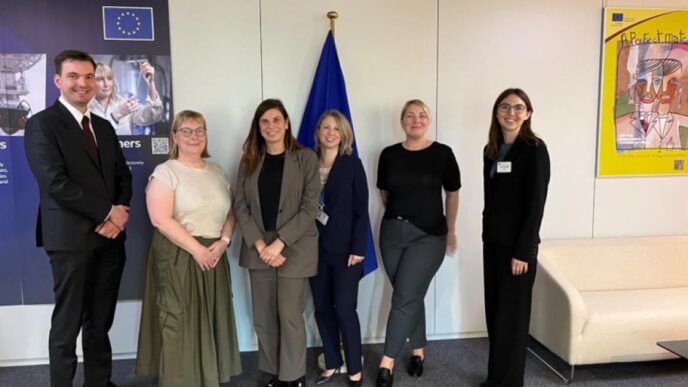


Ahead of the Torino Global Skills Summit 2026, on 23-25 November, Pilvi Torsti, Director of the European Training Foundation (ETF), reflects on the role of international cooperation in addressing today’s skills challenges. The Summit brings policymakers, businesses, education and training leaders, international organisations and practitioners from Europe and beyond to discuss how skills can help economies stay competitive and societies inclusive.
1. Skills challenges are increasingly shaped by global trends such as demographic change, technological transformation and shifting labour markets. Why is a global conversation on skills more important than ever?
Because the forces shaping our labour markets are global. Artificial intelligence, demographic shifts, climate change and economic transformation are affecting countries around the world. While the context may differ, many of the underlying challenges are shared.
A global conversation allows us to exchange knowledge, learn from different experiences and build solutions that are more effective and sustainable.
We know that skills increasingly connect countries through learning, mobility, investment and cooperation. Cooperation in skills strengthens partnerships, creates opportunities for people and helps build trust between countries. Investing in skills together is in everyone’s interest.
That is also why one of the themes we will explore in Turin is the growing importance of skills portability and recognition. Mobility works best when people’s skills, qualifications and experience are visible, trusted and recognised across borders.
Cooperation with partner countries can help make that possible, creating opportunities for individuals while helping labour markets address skills shortages.
2. The ETF is unique among EU agencies in working on skills and human capital development beyond the EU’s borders. What can the EU learn from its neighbouring and partner countries about preparing people for the future of work?
Europe has much to share, but it also has much to learn.
Across our neighbouring and partner countries, we see innovative responses to rapid economic and technological change. These countries are also demonstrating how skills systems can operate in difficult circumstances, including contexts marked by demographic pressures, migration or conflict. We see efforts to reach underserved communities, strengthen lifelong learning and build more agile skills systems.
These experiences offer valuable lessons in resilience, adaptability and innovation that are relevant far beyond their national contexts. For a global Europe, learning is a two-way process. Europe can share its experience, but it must also remain open to ideas and innovations emerging from other parts of the world.
3. How can Europe attract the skills it needs while also supporting partner countries to develop and retain their own talent?
This should never be seen as a choice between one objective and another. The goal is not simply to move talent from one country to another. The goal is to create opportunities for people while ensuring that all countries benefit from investment in skills.
That means supporting quality education and training systems, creating attractive employment opportunities and enabling mobility that works for individuals, employers and societies alike. When done well, skills mobility can create value for both countries of origin and destination.
To achieve this, we need long-term investment in skills ecosystems, both within Europe and across our partner countries. When people can access quality education, training and employment opportunities at home, mobility becomes a choice rather than a necessity. That is ultimately better for individuals, communities and economies alike.
4. We often hear about skills shortages, while at the same time many people remain unemployed in the EU. How can we make sure that labour mobility does not drive local people to unemployment?
Skills shortages and unemployment may appear contradictory, but they often point to a mismatch between available skills and labour market needs.
The solution is not to reduce mobility. It is to invest in skills systems that help people develop the competencies employers need, while ensuring that labour markets remain inclusive and fair.
We need policies that support both mobility and local talent development, because Europe’s competitiveness depends on making the best use of everyone’s potential.
Additionally, stronger lifelong learning, upskilling and reskilling systems can help people adapt to changing technologies and evolving labour market needs throughout their careers.
5. The EU is preparing a new strategy for vocational education and training. What should European policymakers take away from the experiences of its partner countries that will be shared in Turin?
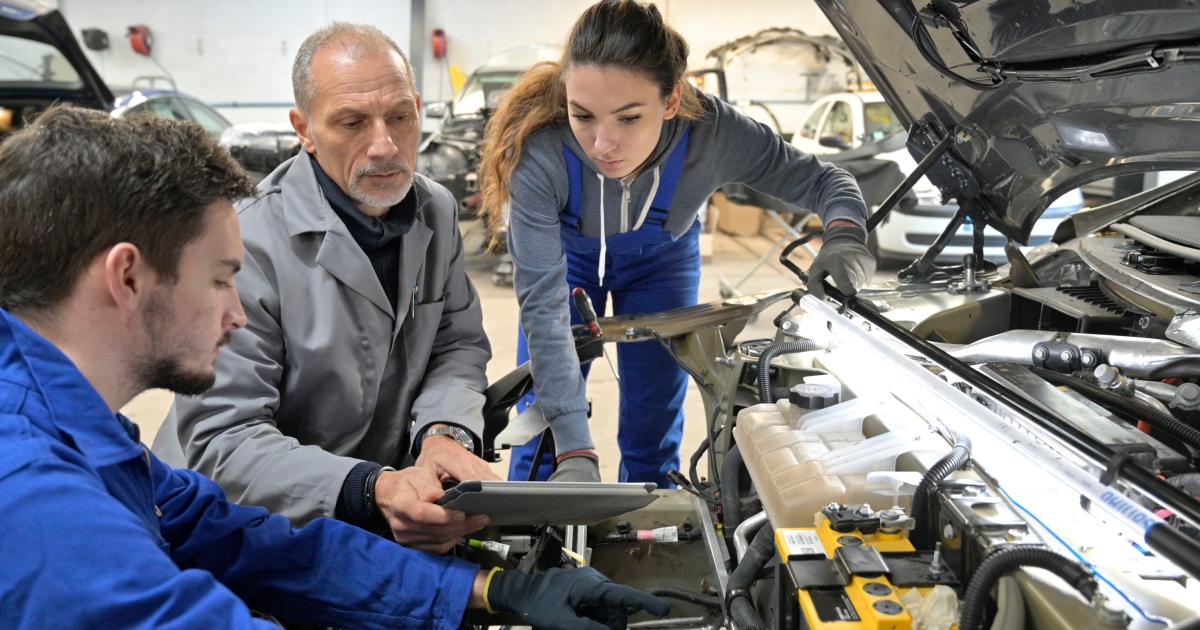
One of the most valuable lessons is that innovation can come from anywhere. Many partner countries are finding creative ways to connect education and training more closely with employers, to modernise curricula and to expand learning opportunities throughout life.
Another lesson is that implementation matters as much as policy design. Across ETF partner countries we see ambitious reforms in areas such as adult learning, Youth Guarantee approaches, labour market inclusion and the recognition of qualifications. What is particularly valuable is how countries are adapting these policies to their own contexts and constraints while still delivering tangible benefits for people.
The Torino Global Skills Summit will bring together experiences from different regions of the world. European policymakers and partner countries have an opportunity to learn from those experiences and to see how common challenges, such as implementation, coordination and financing are being addressed in different contexts. The future of VET will be stronger if it is informed by both European and global perspectives.
6. What would make you consider the Torino Global Skills Summit 2026 a success one year from now?
Success will not be measured by the quality of the discussions alone, important though those are.
One year from now, I would like to see evidence that ideas exchanged in Turin have influenced policies, partnerships and investments. I would like participants to look back and say that the Summit helped them make better decisions and build stronger cooperation.
Ultimately, if one year from now countries are adapting policies, strengthening partnerships, improving skills systems or scaling initiatives that were discussed in Turin, then we will have achieved something meaningful.