

Ecosystems across the globe are increasingly threatened by contamination from per- and polyfluoroalkyl substances (PFAS), a group of more than 10,000 synthetic chemicals nicknamed ‘forever chemicals’ due to their persistence and mobility in the environment. PFAS are used extensively in many industrial and consumer applications and are released across the entire product lifecycle from manufacturing to disposal. Long-term exposure to these chemicals poses risks to human health and the environment.
In Europe, some PFAS are identified as substances of very high concern by the European Chemical Agency; the European Food Safety Authority, which has established guidelines for ‘tolerable’ weekly doses of PFAS in food; and as part of the Drinking Water Directive, which recently implemented rules on how Member States must monitor PFAS levels in drinking water in order to meet EU limits. Several of the most harmful PFAS substances have already been banned in the EU, with a REACH restriction covering all PFAS in fire-fighting foams and an on-going restriction process aiming to address other uses. The Chemicals Industry Action Plan (adopted in 2025) aims to support a transition away from PFAS where alternatives are available.
However, existing data on PFAS is limited, fragmented, inconsistent, and geographically uneven, say the authors of a new study, making it difficult to comprehensively understand how they are distributed and – crucially – where they come from. To address this knowledge gap, the researchers developed a new data-driven workflow to get a better picture of anionic PFAS occurrence in freshwater reservoirs across the globe. Anionic PFAS (containing a negatively charged atom) may be of particular concern in aquatic ecosystems, where they are highly mobile and show potential to bioaccumulate (build up and become concentrated within organisms over time).
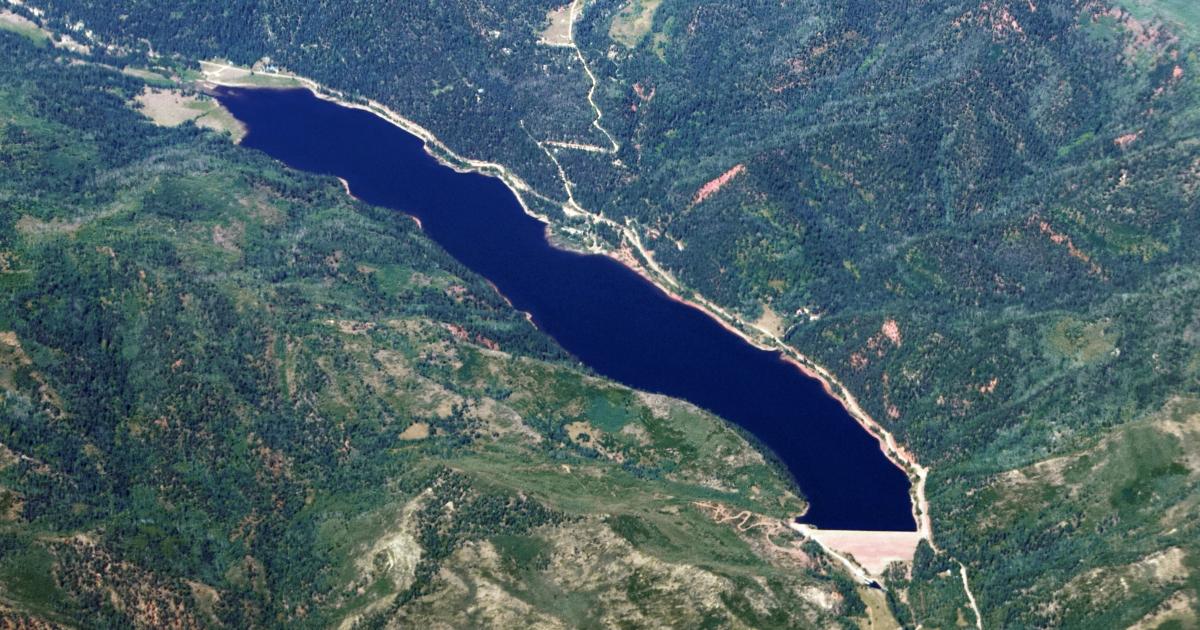
Artificial lakes, such as freshwater reservoirs, fulfil many societal needs. However, their construction causes river networks to become fragmented and disrupted, altering how they transport material downstream and creating enclosed environments that are particularly prone to accumulating contaminants such as PFAS. This is a significant concern given their role as a source of drinking water and place of aquatic habitats for many species.
The researchers compiled sample data from 74 reservoirs across five continents to elucidate how PFAS contamination occurs on various scales (from global to within a single reservoir). The study used a ‘DIM’ workflow (Data compilation–Imputation–Multiscale statistics) – a data-driven framework designed to account for missing or inconsistent data in fragmented datasets and assess phenomena across differing spatial scales. This method helped researchers to find patterns of PFAS contamination and pinpoint potential sources of contamination, and to identify which knowledge gaps persist, indicating how future research can improve PFAS surveillance and pollution mitigation.
The results show that PFAS are widely detected in freshwater reservoirs worldwide, but that their occurrence is not uniform. This may partly reflect how continents prioritise different aspects in their monitoring of PFAS, focusing for example on surface waters (Asia), sediments (Europe), or fish (North America); and how this monitoring is conducted, such as more or less widely or frequently. Differences in legacy (historical) use of the chemicals, regulation, PFAS use, and waste management are also factors.
Based on the available data, European fish tissues showed the greatest bioaccumulation of PFAS; Asian reservoirs showed the most frequent PFAS detections in surface water; and some African reservoirs had comparatively high concentrations of the 14 most frequently reported PFAS. While African reservoirs are underrepresented in monitoring studies, with just five assessed in this study, the results found unexpectedly high contamination levels, suggesting that exposure risks in low- and middle-income countries may be under-appreciated.
The study identifies three distinct patterns (‘paradigms’) of contamination:
- Early-stage contamination dominated by perfluorooctanoic acid (PFOA), linked to domestic and industrial discharge via wastewater (e.g. sewage). This was seen on five continents, with lower PFAS concentrations in sediments and fish and intermediate concentrations in water.
- Ongoing contamination dominated by both PFOA and perfluorooctane sulfonate (PFOS), from mixed sources. This was found predominantly in Asia, linked to industrial zones and urban runoff, and showed elevated levels of PFAS in water, sediments, and fish.
- Longer-term (legacy) buildup of contamination dominated by perfluorobutanoic acid (PFBA), driven by deposition from the atmosphere, industrial discharge, and internal cycling (where chemicals are redistributed and recirculated within the environment). This was primarily seen in Europe and eastern China, which showed the highest PFAS burdens in sediments and fish, and was dominated by PFAS with shorter carbon chains (‘short-chain’ versus ‘long-chain’ PFAS).
These paradigms reveal marked differences in anionic PFAS contamination across global reservoirs, shaped by regionally dominant PFAS sources, hydrology, and legacy use. The shift towards short-chain PFAS is concerning; while less bioaccumulative, these chemicals are highly mobile, persistent, prone to moving between surface water and the atmosphere, and resist conventional treatment. They have proliferated in recent years as a substitute for long-chain PFAS, which have been subject to more widespread and stringent restrictions on a global scale (including under the EU’s strict REACH and persistent organic pollutant regulations, which protect human health and the environment from chemical risks).
The researchers note that their results highlight critical knowledge gaps in the monitoring and reporting of PFAS worldwide. We need international collaboration – as part of a unified One Health approach that sustainably balances the health of people, animals, and ecosystems – to bridge these gaps, they say, and inform effective PFAS governance.
Reference:
Guo, Z-F., Ateia, M., Borgomeo, E., Boeing, W. J., Malnes, D., He, Y-Q., Liu, D., and Xu, Y-Y. (2026) Asymmetrical contamination of anionic PFAS across global freshwater reservoirs. Water Research 289 (2026) 124940. https://doi.org/10.1016/j.watres.2025.124940
To cite this article/service:
“<a href="https://environment.ecScience for Environment Policy”: European Commission DG Environment News Alert Service, edited by the Science Communication Unit, The University of the West of England, Bristol.
Notes on content:
The contents and views included in Science for Environment Policy are based on independent, peer reviewed research and do not necessarily reflect the position of the European Commission. Please note that this article is a summary of only one study. Other studies may come to other conclusions.