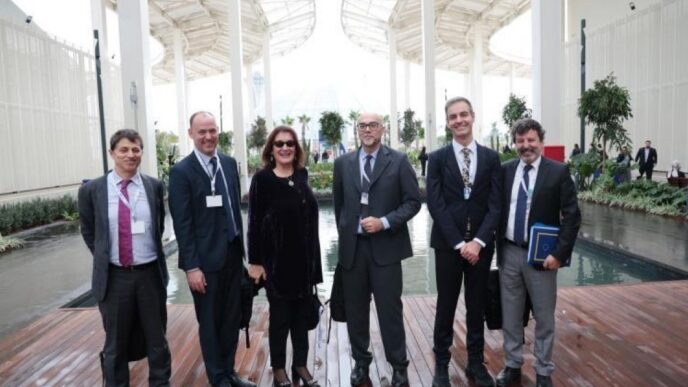


“Peace is necessary, peace is still possible.” With these words, FPI Head of Service Peter M. Wagner set the tone for FPI’s participation in the Forum, held under the theme “From Sovereignty to Cooperation”.
That message echoed the Forum’s opening at the Palais de Chaillot, where UN Secretary-General António Guterres warned of a fracturing world in which international law is increasingly disregarded, emphasising the importance of international cooperation in responding to global challenges.
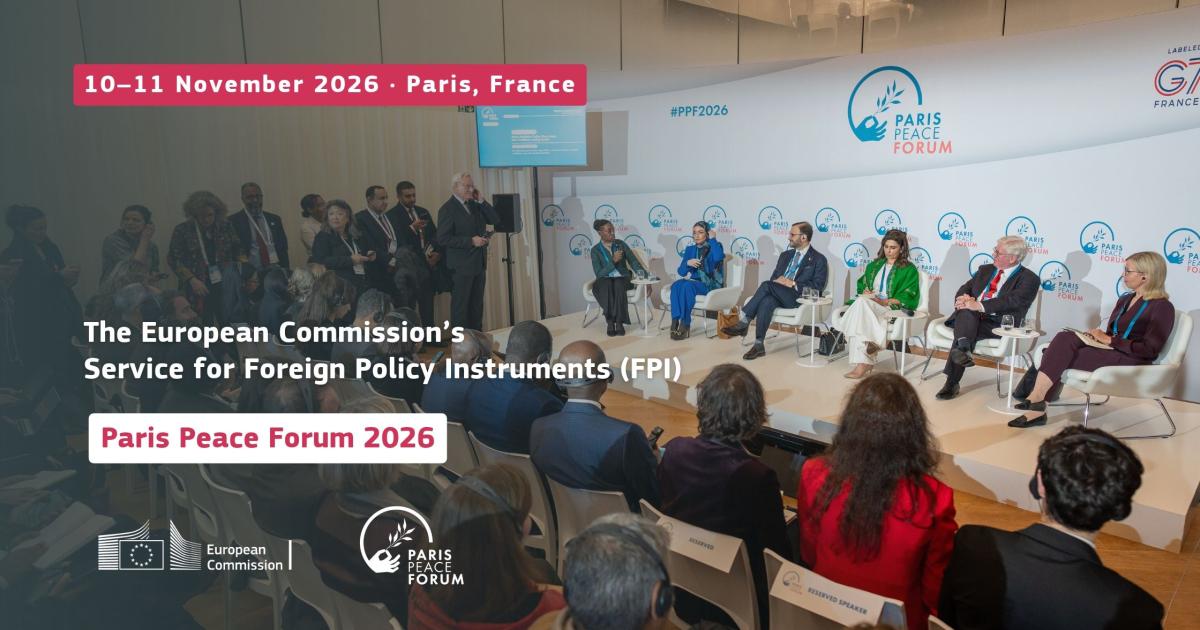
FPI, a supporter of the Forum since its first edition, came to Paris in the same spirit of cooperation. Beyond its sessions, the Forum offers a wide range of encounters, from informal conversations to side meetings. A central element of FPI’s participation was the panel it co-organised on peace mediation, which brought together a diverse range of international actors and perspectives. Moderated by Comfort Ero, President and CEO of the International Crisis Group, it featured speakers from Qatar, Pakistan and Saudi Arabia, as well as two European peace organisations, the European Institute of Peace and CMI – Martti Ahtisaari Peace Foundation. Peter M. Wagner also visited the Forum’s Space for Solutions, meeting teams behind some of the 40 initiatives selected from more than 600 applications from over 90 countries.
Peace Mediation Today: New Actors, New Coalitions, Lasting Results
FPI’s Head of Service opened the panel with a sober assessment. Conflicts have multiplied and become more brutal, international humanitarian law is “less and less respected”, and the number of actors seeking to mediate has grown with them. “What is important for us,” he said, “is that we really learn to better coordinate with all the other international players in this field.”
The panellists took up the question from their own perspectives. Majed Al-Ansari, Advisor to the Prime Minister of Qatar and Official Spokesperson for the Ministry of Foreign Affairs, explained that Qatar’s regional interests make engagement in mediation particularly important. He likened mediation to a “supply chain of peace”, in which actors bring their capabilities together “not in competition but in complementarity”. Manal Radwan, Advisor and Special Envoy to the Minister of Foreign Affairs of Saudi Arabia for Negotiations and Peace Efforts, shared this view, describing mediation today as “a distribution of roles”.
This growing plurality, however, comes with a condition. As Hanna Klinge, Acting CEO of CMI, put it: “With more mediators and more diplomacy, we get more peace only if the different efforts connect.”
Making Peace Last
One idea kept returning throughout the discussion: peace takes time. Drawing on his experience of the Colombian peace process, Eamon Gilmore, Senior Advisor at the European Institute of Peace, described peace mediation as “a long slog” that can stretch over years, from the first negotiations to the implementation of an agreement.
It is in this long stretch after the signature of an agreement that speakers saw the EU’s distinctive contribution: its ability to remain engaged beyond the deal, combining value-based diplomacy with financial support, institutional expertise and help with implementation. Through its support for mediation and dialogue, FPI helps turn this long-term engagement into results on the ground. Speakers from the Gulf, noted that many peace agreements bear the names of European cities, and called for cooperation with the EU to continue and grow.
Three messages stood out from the discussion: regional actors have become indispensable to peace mediation; effective mediation requires strong cooperation between a growing number of actors; and sustaining peace agreements requires continued engagement after they are signed. Asked what turns mediation into lasting peace, FPI’s Head of Service kept his answer short: “Endurance and empathy.”
In a more conflictual world, the EU works with partners and invests in mediation to help achieve sustainable peace. The Forum reaffirmed FPI’s commitment to supporting peace mediation and cooperation with partners. As Wagner reflected, the Forum remains “a very relevant forum to meet our interlocutors, to present our ideas, our approaches and to learn”.