

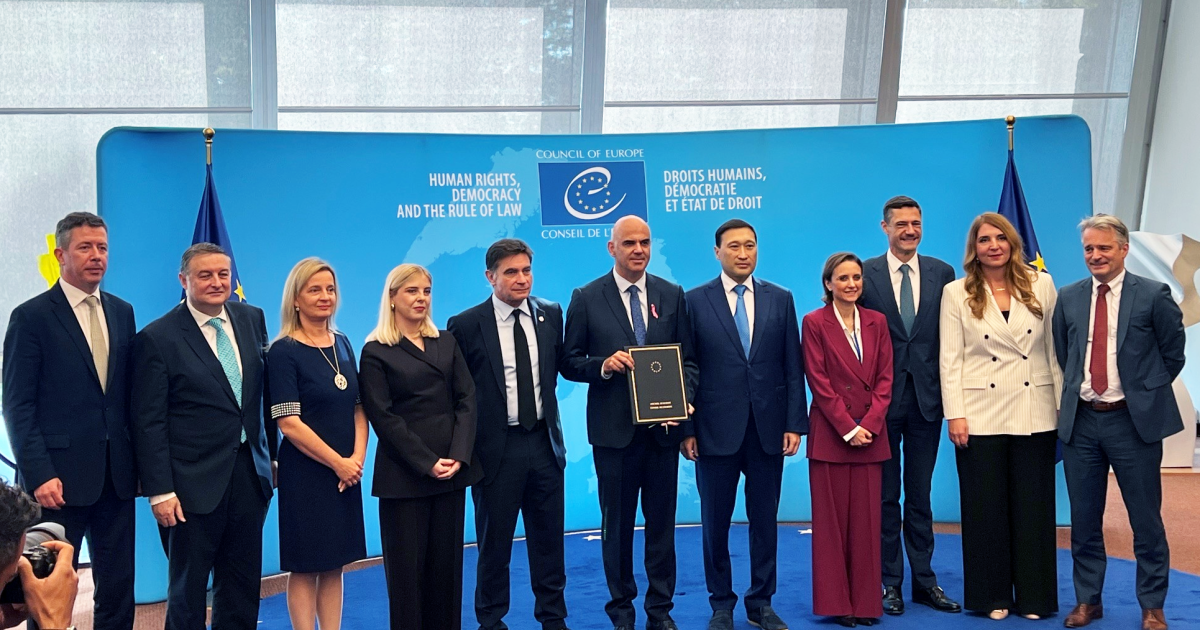
On 14 October, the EU signed the Additional Protocol to the Council of Europe Convention on Laundering, Search, Seizure and Confiscation of the Proceeds from Crime and on the Financing of Terrorism, known as the Warsaw Convention.
The Protocol contains strengthened rules on freezing and confiscation measures, asset management, police and judicial cooperation, as well as the prevention of money laundering.
Once in force, the Protocol will facilitate more effective cross-border cooperation on asset recovery and strengthen efforts to combat money laundering across Council of Europe Member States. It will help authorities to cooperate more closely and thereby strengthen their ability to deprive criminals of their illicit gains.
Background
Organised and financial crime pose a major threat to security and to the economy, with illicit profits fueling further criminal activities and infiltrating the economy. Despite progress in the area of asset recovery, only 1% of assets are recovered in the EU. Therefore, as laid down in ProtectEU – the Internal Security Strategy, seizing assets and confiscating criminal gains is an essential tool to disrupt criminal networks and protect the economy as a whole.
At EU level, several initiatives have improved the legal framework to fight money laundering and criminal finances, in particular the 2024 asset recovery and confiscation Directive, the 2018 regulation on mutual recognition of freezing and confiscation orders and the 2024 anti-money laundering rules.
On 13 June 2024, the Council authorised the Commission to participate, on behalf of the EU, in negotiations on an additional Protocol to update the Warsaw Convention with the objective to create an ambitious legal framework on asset recovery, extending beyond the EU. The Protocol was adopted by the Council of Europe Committee of Ministers on 15 May 2026.
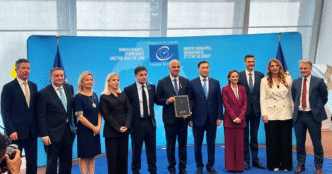
As the Protocol is a mixed agreement, covering matters falling within both EU and Member State competence, it requires signature by both the EU and the Member States. The EU ambassador, Mr. Alexandre Stutzman, signed the Protocol on behalf of the Union at the signature ceremony at the Council of Europe in Strasbourg. In addition to the EU, Georgia, Greece, Hungary, Luxembourg, Monaco, Montenegro, San Marino and the UK have also signed.
Next steps
Following the signature, the Council will discuss and decide on the conclusion of the Protocol as well as the Warsaw Convention, which was signed in 2009, but has not been ratified so far. The conclusion of both the Convention and the Protocol will also require the consent of the European Parliament.