

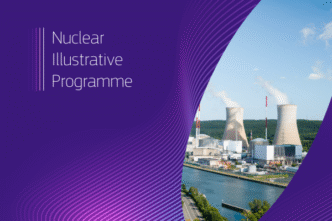

Commission assesses nuclear investment needs by 2050 in view of decarbonisation and competitiveness goals
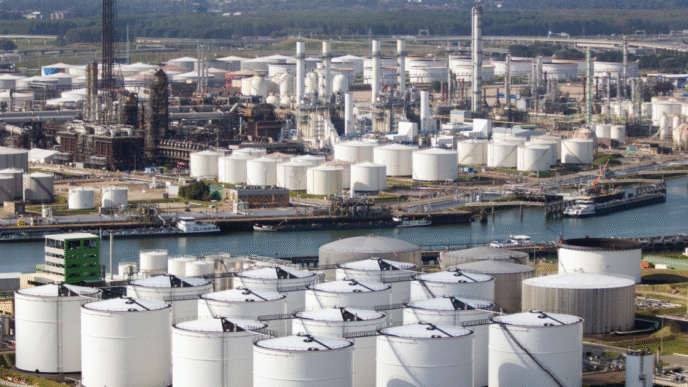
Delivering Member States’ plans regarding nuclear energy will require significant investments, of around €241 billion until 2050, both for lifetime extensions of existing reactors and the construction of new large-scale reactors. Additional investments are needed for small modular reactors, advanced modular reactors, and microreactors and in fusion for the longer-term future, the Commission has assessed in its eighth nuclear illustrative programme (‘PINC’).
For some EU countries, nuclear energy is an important component of decarbonisation, industrial competitiveness, and security of supply strategies. The Commission estimates that over 90% of electricity in the EU in 2040 will be produced from decarbonised sources, primarily renewables, complemented by nuclear energy. Nuclear installed capacity across the EU is projected to grow from 98 gigawatt electrical (GWe) in 2025 to 109 around GWe by 2050. Crucially, all zero and low carbon energy solutions are needed to decarbonise the EU’s energy system.
It is therefore important to maintain the EU’s industrial leadership in this sector. This nuclear illustrative programme will help drive Member States’ actions towards priority areas.
More information is available is a press release and questions & answers online.
(For more information: Anna-Kaisa Itkonen – Tel.: +32 2 295 75 01; Giulia Bedini – Tel.: +32 2 295 86 61)
Ukraine receives a further €1 billion G7 loan initiative
Today, the European Commission has disbursed the fifth tranche of its exceptional Macro-Financial Assistance (MFA) loan to Ukraine, worth €1 billion, further reinforcing the EU’s role as Ukraine’s largest donor since the start of Russia’s war of aggression, with overall support approaching €150 billion.
In total, the MFA amounts to €18.1 billion and represents the EU’s contribution to the G7-led Extraordinary Revenue Acceleration (ERA) loans initiative, which collectively aims to provide approximately €45 billion in financial support to Ukraine. These loans are to be repaid using proceeds from immobilised Russian State assets held in the EU. With this latest payment, the Commission’s total lending to Ukraine under this MFA reaches €7 billion since the beginning of 2025.
As agreed by the European leaders in the Special European Council in early March, and reiterated by President Ursula von der Leyen, the Commission stands ready to frontload the EU contribution to the ERA loans initiative, if necessary. It remains in close contact with the Ukrainian authorities concerning subsequent disbursements. Should Ukraine submit a request, the Commission is prepared to respond swiftly. This would enable the EU to support any essential increases in military expenditure in the coming weeks and months, helping ensure Ukraine is in a strong position ahead of any potential peace negotiations.
(For more information: Balazs Ujvari – Tel.: +32 2 295 45 78; Francisca Marçal Santos – Tel.: +32 2 299 72 36)
The European Commission helps boosting Egypt’s green transition
On 15 June, the European Commission and the Government of Egypt will launch the EU-Egypt Investment Guarantee for Development Mechanism.
This platform will attract investments to high impact projects in areas such as clean energy, water and wastewater management and sustainable agriculture. It will also support digital transformation, and the development of small and medium-sized enterprises (SMEs).
The platform aims to mobilise up to €5 billion in investments by 2027. This includes €1.8 billion announced as part of the EU-Egypt Strategic and Comprehensive Partnership. To achieve this, the platform will leverage EU resources from the European Fund for Sustainable Development Plus (EFSD+). It will also draw resources from European and International Financial Institutions (IFIs) that implement EU guarantees in close coordination with Member States and the private sector.
It marks a key milestone under the EU-Egypt Strategic and Comprehensive Partnership and contributes to the EU’s Global Gateway strategy.
(For more information: Markus Lammert – Tel.: +32 2 296 75 33; Luca Dilda – Tel.: +32 2 295 21 53)
Commission is seeking views on how to strengthen supplementary pensions
The European Commission is seeking views on how to make supplementary pensions more accessible, transparent and effective for citizens across the EU. This initiative is part of the Savings and Investments Union and aims to help individuals build stronger financial security for retirement.
The consultation seeks feedback on a range of possible measures to support wider participation in occupational and personal pension schemes and to improve the tools available to citizens for tracking, comparing and understanding pension entitlements. Key areas include the potential role of automatic enrolment to boost participation, as well as the development of national pension tracking systems and pension dashboards to provide clearer individual information and stronger data for policymaking.
Stakeholders are also invited to comment on the review of the Directive on the activities and supervision of institutions for occupational retirement provision (IORP II Directive), with a focus on strengthening governance, enhancing risk management, improving transparency and enabling the scaling up of workplace pensions. Moreover, the consultation aims to identify obstacles to the uptake of the pan-European Personal Pension Product (PEPP) and gather views on ways to support its broader use across the EU. In particular, it seeks inputs on how to simplify the existing Basic PEPP, including by facilitating its digital distribution and exploring the possibility of enrolment through the workplace.
The Commission invites social partners and all stakeholders, including pension providers, consumers, civil society and Member States authorities to share their views by 29 August 2025.
On Monday 16 June, the Commission will also host a reality check dedicated to exploring emerging trends in retirement provisioning across the European Union. This forum will highlight best practices from Member States on occupational and personal pensions.
This consultation and the stakeholders’ forum are a key step in preparing the next phase of the Savings and Investments Union. The insights gathered will inform a package of measures to be presented in the fourth quarter of 2025.
(For more information: Arianna Podesta – Tel.: +32 2 298 70 24; Marta Perez-Cejuela Romero – Tel.: +32 2 296 37 70)
Generative AI set to transform EU economy but requires further policy action
Generative AI (GenAI) could significantly boost innovation and productivity across key sectors in the EU, from healthcare to education and the cultural and creative industries, according to a new scientific report by the European Commission’s Joint Research Centre (JRC). The outlook report highlights GenAI’s transformative potential for innovation, productivity, and societal change. But it also stresses that its rapid development poses cross-cutting risks—including amplifying misinformation, algorithmic bias, job disruption, and privacy concerns—that demand urgent attention.
To harness GenAI’s benefits while safeguarding fundamental rights, the report underscores the need for a multidisciplinary and strategic policy approach. It calls for close alignment with EU laws such as the AI Act and data legislation, as well as EU AI innovation policies to ensure GenAI remains trustworthy, inclusive, and fully aligned with democratic values and EU laws.
Ekaterina Zaharieva, Commissioner for Startups, Research and Innovation, said: “Europe has the potential to lead in generative AI. With the right policies and investments, we can drive competitiveness and innovation. Independent scientific advice helps the EU benefit from a complex and fast-paced technology such as generative AI”.
The Commission has launched a first wave of EU funding opportunities with close to €700 million funding to integrate generative Artificial Intelligence in Europe’s strategic sectors such as manufacturing, robotics, health or energy. Researchers, innovators, industrial companies, and others applying will become part of GenAI4EU, the Commission’s flagship initiative to boost Generative AI “made in Europe”.
The report is published online.
(For more information: Thomas Regnier — Tel.: + 32 2 299 10 99; Marine Strauss — Tel.: +32 2 298 91 03)
Commission steps up engagement with EU civil society
Today, the European Commission has stepped up its preparations for the upcoming EU Civil Society Strategy, a framework aimed at supporting, protecting, and strengthening the engagement with civil society organisations across the European Union. For this purpose, the Commission launched a public consultation to offer citizens and stakeholders an opportunity to share their ideas.
The EU Civil Society Strategy will propose concrete actions to better protect and support civil society organisations across the EU. The objective of the Strategy will be to enable an environment that allows civil society to thrive, contributing to a more inclusive, participatory and just European society.
Henna Virkkunen, Executive Vice-President for Tech Sovereignty, Security and Democracy said: “Civil society organisations lend an invaluable support to the Commission when it comes to supporting and safeguarding democracy. It is crucial that, in turn, the Commission looks out for civil society organisations.”
Michael McGrath, European Commissioner for Democracy, Justice, the Rule of Law and Consumer Protection, said: “A vibrant civil society is the heartbeat of our European democracies. The Strategy will protect and empower civil society organisations in their work, strengthening our engagement to ensure that they can meaningfully contribute to EU policymaking. We are inviting stakeholders to contribute to our consultation so that the Strategy reflects real-time needs and challenges of civil society representatives across Europe.”
The consultation will run for 12 weeks, until 5 September. The contributions received will feed into the preparation of the upcoming EU Civil Society Strategy.
(For more information: Markus Lammert – Tel.: +32 2 296 75 33; Cristina Torres Castillo — Tel.: + 32 2 299 06 79)
The EU institutions agree to streamline assessments of chemicals in Europe
The Commission welcomes the provisional agreement reached last night between the European Parliament and the Council on the so-called ‘one substance, one assessment’ (OSOA) package. This is a key deliverable of the Chemicals Strategy for Sustainability.
The goal of this initiative is to streamline hazard and risk assessment of chemicals across the EU and improve access to information through a common data platform on chemicals. This is a significant step towards better and faster protection of people’s health and the environment. People, companies as well as EU and Member State authorities will benefit from more coherent, predicable and transparent assessments of chemicals used in products, such as medical devices, toys, food, pesticides and biocides.
The ‘one substance, one assessment’ package is composed of three legislative proposals: a regulation establishing a common data platform on chemicals; a regulation re-attributing technical tasks and improving cooperation among EU agencies; and a directive on the re-attribution of technical tasks to the European Chemicals Agency (ECHA).
The new measures will contribute to the Commission’s simplification agenda, by enabling easy access to data on chemicals with a new common data platform, establishing a new monitoring and outlook framework that will allow for earlier detection of chemical risks and strengthening cooperation and consolidating scientific and technical work on chemicalsbetween EU agencies.
Jessika Roswall, Commissioner for Environment, Water Resilience and a Competitive Economy, said: “Today’s provisional agreement paves the way for a safer and healthier future for people and the environment. This more coherent and efficient legal framework on chemicals, with simplified assessment processes, will make it easier to do business while ensuring swifter protection from hazardous chemicals.”
The European Parliament and the Council will now formally have to adopt the package before it can enter into force. It will enter into force 20 days after its publication in the Official Journal of the EU.
(For more information: Maciej Berestecki — Tel.: + 32 2 296 64 83; Anna Gray – Tel.: +32 2 298 08 73)
Commission clears creation of joint venture by VERBUND and Stadtwerke Münster
The European Commission has approved, under the EU Merger Regulation, the creation of a joint venture by VERBUND AG of Austria and Stadtwerke Münster GmbH of Germany.
The transaction relates primarily to the creation and operation of a battery storage facility in the urban area of Münster.
The Commission concluded that the notified transaction would not raise competition concerns, given the joint venture’s negligible activities in the European Economic Area and the companies’ limited market positions resulting from the proposed transaction. The notified transaction was examined under the simplified merger review procedure.
More information is available on the Commission’s competition website, in the public case register under the case number M.11825.
(For more information: Arianna Podestà – Tel.: +32 2 298 70 24; Sara Simonini – Tel.: +32 2 298 33 67)
STATEMENTS
Statement by Commissioner Micallef on the World Day Against Child Labour
Yesterday was World Day Against Child Labour. On this occasion, Commissioner for Youth Glenn Micallef issued a statement:
For the European Union, the fight against child labour is an absolute priority. Every child trapped in labour is a promise broken, a future stolen from us all. We must act with urgency.
Through the EU Strategy on the Rights of the Child, we are promoting education initiatives that keep children out of work and highlighting the need for supply chains to be free from child labour. We also encourage stronger labour inspections in partner countries.
We call on all partners—governments, international organisations, civil society, and the private sector—to step up for our joint ambition. Key priorities include addressing the main drivers of child labour. This includes promoting living wages for adults to alleviate household poverty, investing in accessible quality education for children in vulnerable situations, social protection, and enforcing minimum age standards.
The full statement is available online.
(For more information: Eva Hrncirova – Tel.: +32 2 298 84 33; Quentin Cortès – Tel.: +32 2 291 32 83)
ANNOUNCEMENTS
President von der Leyen participates in the G7 Summit, hosted by Canada
The President of the European Commission, Ursula von der Leyen, will be in Kananaskis from Sunday to Tuesday, 15 to 17 June, to participate in the G7 Summit hosted by Canada, together with the President of the European Council, António Costa.
On Sunday, Presidents von der Leyen and Costa will host a joint press briefing taking place at +/-18:45 (local time), which you can follow live on EBS.
On Monday, President von der Leyen will participate in the four G7 sessions organised for the day, on the topics of the ‘global economic outlook’; ‘economic growth and resilience’; ‘making communities safe’; and ‘making the world secure’.
On Tuesday, the President will participate in the fifth session of the Summit, on a ‘strong and sovereign Ukraine’. President von der Leyen will later participate in the G7 closing session, taking place at 10:30 (local time). Later in the day, there will be a seventh and final session, on the topic of energy security, where several invited countries outside the G7 will also participate.
Throughout the Summit, the President will engage with the leaders of the participating countries. More information on the Summit and its participants is available on the G7 Summit website. Audiovisual material will be available on EBS.
(For more information: Paula Pinho – Tel.: +32 2 292 08 15)
Executive Vice-President Mînzatu in Bulgaria to discuss competitiveness, jobs, and skills for the green and digital transition
Next week, Executive Vice-President for Social Rights and Skills, Quality Jobs and Preparedness, Roxana Mînzatu, will travel to Sofia, Bulgaria, to discuss employment, skills, quality jobs and social policies with Bulgarian authorities and social partners.
On Monday morning, Executive Vice-President Mînzatu will participate in the Green Transition Forum to discuss how to navigate the digital and green transitions while creating people focused, inclusive and sustainable growth. Following the Forum, she will meet with Bulgarian social partners to discuss the upcoming Quality Jobs Roadmap.
In the afternoon, she will meet with Prime Minister of Bulgaria, Rossen Jeliazkov, Minister of Labour and Social Policy, Borislav Gutsanov, and Speaker of the National Assembly, Natalia Kiselova.
On Tuesday, the Executive Vice-President will visit the Institute for Computer Science, Artificial Intelligence and Technology, together with Deputy Prime Minister, Tomislav Donchev. She will also visit two projects supported under the European Social Fund Plus, the EU’s main instrument for investing in people and the implementation of the European Pillar of Social Rights.
To conclude the visit, Executive Vice-President Mînzatu will hold meetings with Minister of Education and Science, Krasimir Valchev, as well as with members of the Parliamentary Committees on Labour and Social Policy, Education and Science, and European Affairs and Oversight of the European Funds.
(For more information: Eva Hrncirova – Tel.: +32 2 298 84 33; Quentin Cortès – Tel.: +32 2 291 32 83)
Cooperation on gas, clean energy transition focus of EU-Azerbaijan Energy Dialogue in Brussels today
Commissioner for Energy and Housing, Dan Jørgensen, welcomed Azerbaijan’s Minister of Energy, Parviz Shabazov, in Brussels today to exchange on the strategic energy partnership between the EU and Azerbaijan.
Discussions centred on continuous cooperation on gas supplies, notably via the Southern Gas Corridor, as well as the possibility to expand green energy links and work towards market integration across the region in line with the recent EU Black Sea Strategy adopted by the Commission.
Commissioner Jørgensen said: “Azerbaijan is a reliable partner contributing to Europe’s energy security. On top of gas supplies, we continue to work together on renewables, energy efficiency, energy infrastructure and methane emissions abatement. Today’s dialogue is another stepping stone in making our strategic energy partnership future-oriented and mutually beneficial.”
Today’s meeting follows the 11th Ministerial Meeting of the Southern Gas Corridor Advisory Council and the 3rd Ministerial Meeting of the Green Energy Advisory Council which took place in April, in Baku.
(For more information: Anna-Kaisa Itkonen – Tel.: +32 2 295 75 01; Giulia Bedini – Tel.: +32 2 295 86 61)