


Chatbots are growing fast, and they’re rapidly changing how we search for information online. Today, people worldwide already visit generative AI websites – such as ChatGPT and Gemini – around 9.5 billion times each month. Chatbots are reshaping recruitment too, whether you’re searching for work or for skilled talent.
Here’s how AI has entered the scene, from job search to interview:
- Jobseekers are increasingly asking AI assistants to search for roles that fit their experience, schedule and lifestyle, rather than searching job boards themselves using keywords.
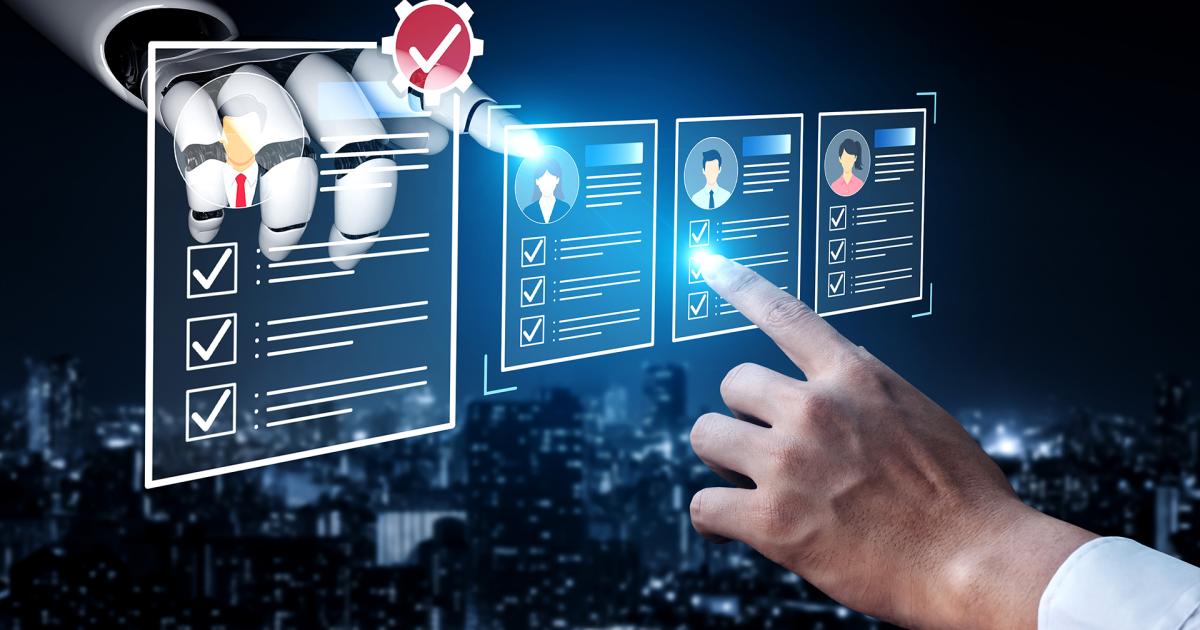
- Applicants now also routinely use AI to draft CVs, cover letters and auto-apply to dozens of postings in minutes. But because this makes it easier to apply en masse, recruiters face far higher volumes of polished applications. To deal with this influx, they use chatbots to handle candidate enquiries, pre-screen applicants and schedule interviews.
- Because AI makes it easier to fake a good fit, some employers are adding identity checks and skills tests to confirm candidates are who they claim to be.
- The first interviewer is often no longer a human. Interactive chatbots ask screening questions, analyse responses and decide who advances – saving time for employers. But, at this early stage of AI development, this can make the interview experience rather frustrating for candidates.
The AI paradox
So, if you’ve ever wondered whether a human actually read your application, you’re right to ask. According to an official EU statistics, just under 1 in 5 EU businesses (19.95 %) used AI technologies for text mining, decision-making and other processes in 2025. This figure jumps to 55.03 % for large EU companies. For jobseekers, that means the odds of your CV being screened by software first – and a recruiter only later – are rising fast, especially at bigger employers.
Here’s the interesting twist. Companies are enthusiastic about AI in general, but nervous about letting it make decisions about people. A recent EU survey found that 42 % of SMEs already use AI, and 75 % believe it will improve job quality. However, almost half (49 %) admit they don’t trust AI or automated systems to make decisions about their workforce. Employers want the speed AI offers when screening many applications, but they know it might quietly filter out a great candidate. A balanced approach would be to use AI to assist, not replace, human judgement.
Your rights in the machine age
This is where Europe has taken the lead. Under the EU AI Act, AI systems used in recruitment are considered high-risk since they can shape jobseekers’ career prospects, perpetuate discrimination or undermine privacy. The Act aims to make sure AI systems in the EU are safe, transparent and respectful of fundamental rights. This means that if an algorithm screens you out, you’re not powerless – the law expects a human to be involved in the process.
Don’t forget, human support is still out there. EURES Advisers can guide you in realistically presenting your skills and navigating a changing recruitment landscape where AI is increasingly part of the process.
Read the EURES article on how the AI Act protects jobseekers.
Related links:
The 2026 Generative AI Landscape Report
Use of artificial intelligence in enterprises – Eurostat
Eurobarometer survey highlights growing use of AI in European companies
Jobseekers know your rights in the age of AI hiring
Read more:
Find EURES Advisers
Living and working conditions in EURES countries
EURES Jobs Database
EURES services for employers
EURES Events Calendar
Upcoming Online Events
EURES on Facebook
EURES on Twitter
EURES on LinkedIn