

The Commission today published its assessment of Poland’s final updated National Energy and Climate Plan (NECP), acknowledging Poland’s increased ambition compared to its draft plan. Full implementation of the plan can lead Poland to achieve its national climate and energy targets for 2030 while making an important contribution to staying the course towards the EU’s 2040 and 2050 climate targets.
The assessment also includes guidance for implementation, including to increase carbon removals under the Land Use, Land Use Change and Forestry (LULUCF) Regulation, to introduce stronger measures in the buildings sector, as well as to phase out fossil fuel subsidies.
The Commission assessment concludes that Poland is on track to meet its Effort Sharing Regulation target of reducing greenhouse gas (GHG) emissions by 17.7% by 2030 compared to 2005. In the Land Use, Land Use Change and Forestry (LULUCF) sector, based on the Plan’s projections for 2030, carbon removals are expected to increase significantly. Nonetheless, Poland still has a projected gap for 2030 towards their LULUCF target.
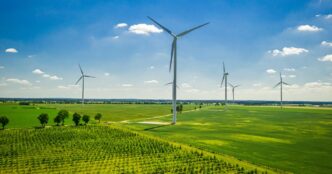
On renewable energy, Poland’s updated national contribution now aligns with the EU’s overall 2030 renewable energy target. However, Poland is still required to introduce additional measures in heating and cooling, as well as in transport and industry, to increase the share of renewables in these sectors.
The updated Plan also increases the expected contribution of energy efficiency towards Poland’s primary and final energy consumption in 2030 to align with the EU target. Poland expects its measures in the building sector to deliver a major share of the energy savings achieved. At the same time, the Commission emphasises the particular need to adopt ambitious policies for 2030, 2040 and 2050 to ensure more energy savings are achieved in buildings.
The Commission’s assessment complements the EU-wide assessment published on 28 May 2025. Poland was the final Member State to submit its National Energy and Climate Plan to the Commission.
Next steps
With today’s publication, all 2030 national energy and climate plans received from Member States have now been updated and assessed. These plans set out the Member States’ policy and investment initiatives up to 2030. Their efforts continue on implementation and delivery, with a focus on the use of public funds to de-risk investments, unlocking private finance and the Commission coordination of measures at regional and European level.
Member States are to report on the implementation of their NECPs in March 2027. The Commission will continue to monitor progress towards the delivery of the 2030 climate and energy targets. The Commission will also work with Member States as they address remaining gaps, mobilise funding (including through the EU and national budget), and deliver appropriate actions.
Background
NECPs are established in the Regulation on the Governance of the Energy Union and Climate Action. Updating the NECPs is a key process for Member States to set out how Member States plan to meet the EU’s 2030 climate and energy targets and Energy Union objectives. On 28 May 2025, The Commission published an EU-wide assessment and a Staff Working Document with the individual assessment of 23 national plans. The remaining national plans were assessed at later stages, shortly after their submission.