

According to the Annual Report on Intra-EU Labour Mobility, around 14 million EU citizens live or work long-term in another Member State; however, workers still encounter barriers to working abroad, such as limited information, costly and complex qualification-recognition procedures and legal uncertainty when trying to demonstrate their skills to employers in another country or region.
In fact, the Letta report highlighted that free movement remains the least developed of the four freedoms of the EU Single Market.
These barriers to working abroad can restrict labour mobility, worsen labour and skills shortages, and prevent skilled workers from reaching the places where they are most needed.
Supporting skills and qualifications across borders
The Pact for Skills and EAfA promote cross-border cooperation on quality upskilling, reskilling, and work-based learning.
Through Regional Skills Partnerships and Large-scale Skills Partnerships established under the Pact, organisations come together to support skills development and recognition at regional and sectoral levels.
EAfA also supports efforts to strengthen the learning mobility of vocational education and training (VET) learners and apprentices.
Explore practical approaches at the webinar
Want to learn how these initiatives can support cooperation in practice?
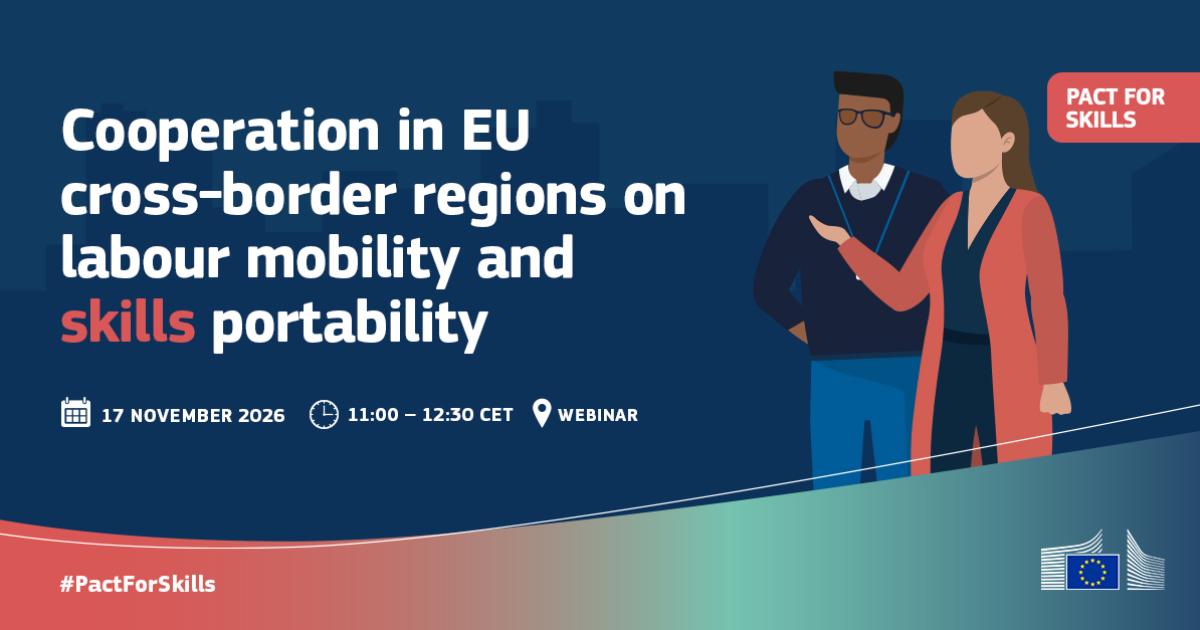
The upcoming webinar will explore the Pact for Skills and EAfA’s work in the context of the wider EU policy landscape and initiatives addressing challenges related to labour mobility.
For example, you will learn about the Fair Labour Mobility package, including the Skills Portability Initiative, and how these make it easier for professionals, employers and public authorities to recognise skills and qualifications obtained in another EU country.
The webinar will also explain the role of the European Commission’s Interreg programme in enhancing cooperation in EU cross-border regions for improved labour mobility, opening discussions on how synergies with the Pact for Skills could improve cooperation on skills portability.
Expect to hear about the tools and support structures that can improve the transparency, comparability, and recognition of qualifications, as well as approaches to validating formal and informal learning across countries and regions. The webinar will also explore how the Pact for Skills and EAfA could contribute to the development of transnational joint VET programmes.
Discover real-world examples of labour mobility
This is your opportunity to hear about practical examples of labour mobility and skills portability initiatives from across Europe, including:
- The EUREGIO Cross-Border Region Regional Skills Partnership between Germany and the Netherlands, which aims to develop a connected cross-border skills ecosystem to respond to the green and digital transitions.
- The Pact for Microcredentials Regional Skills Partnership in Italy, which aims to aims to support training providers to adopt higher-quality microcredential standards and involve employers in workers’ targeted learning opportunities.
- And the EAfA Community on the Learning Mobility of Apprentices, led by Euro App Mobility, which puts long-term mobility at the heart of VET programmes.
In addition, you will also have the chance to have your say on the labour mobility practices presented during a feedback round and live polls.
Are you a Pact for Skills or EAfA member and want to learn more about labour mobility and skills portability? Secure your place by 16 November.