

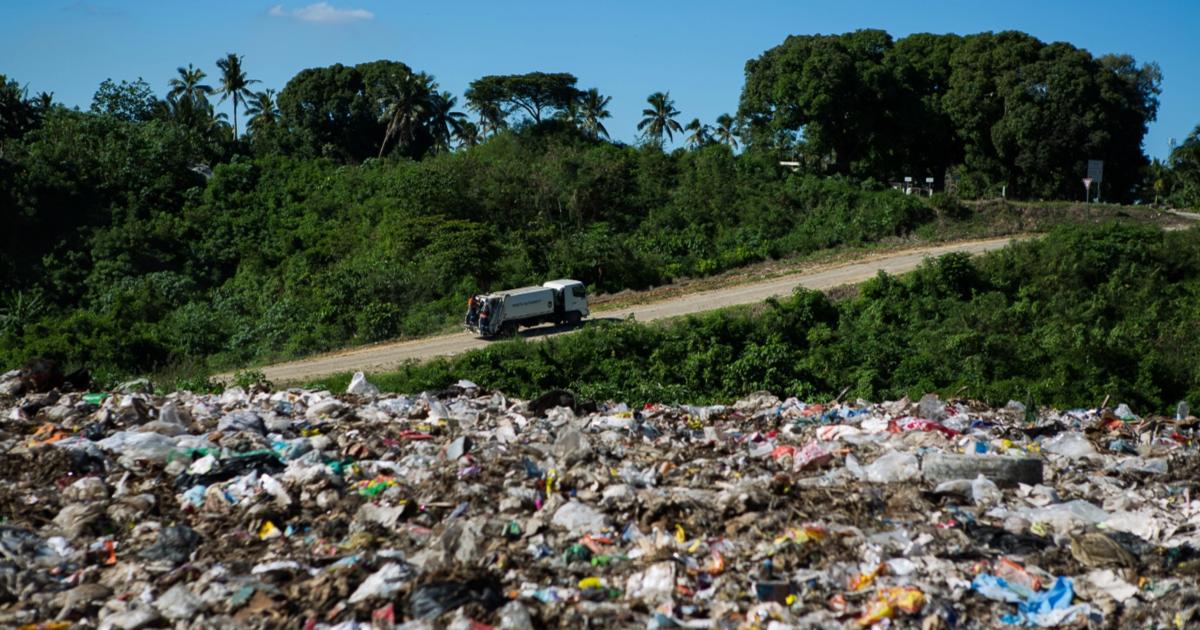
Although it is the least preferred disposal option according to the EU Waste Framework Directive (2008), some EU countries still landfill the majority of their municipal waste. This is also the case globally, with around 95% being disposed of in landfill sites. As water (such as rainwater) passes through the waste material, collecting soluble chemicals, these sites generate liquid ‘leachate’.
Leachate typically contains organic compounds, often generated in decomposition, and persistent chemicals including solvents, pesticides and PFAS (per- and polyfluoroalkyl substances). Some of these chemicals may be endocrine disruptors. Landfill leachate is therefore a significant environmental threat, with pollutants that can contaminate groundwater, surface waters and soil if not adequately monitored and controlled.
Operation of landfill sites in Europe is regulated by the Landfill Directive (1999), with a 2018 amendment setting a target for a maximum of 10% of municipal waste sent to landfill by 2035. However, a 2023 report from the European Commission identified 13 Member States that were at risk of failing to meet the 2035 goal. Effective management of leachate therefore remains a serious policy issue across the EU, and around the globe.
The collection and treatment of leachate is challenging. Microbial remediation – whereby bacteria and other microbes (microscopic organisms) break down toxic pollutants into less harmful substances – is a key tool used in its treatment. The microbes at work in leachate treatment plants may be intentionally added, but are mostly already present in the leachate.
Many species of microbe are present in any given site, performing different functions and forming an ecological community that helps to reduce leachate toxicity as it breaks down complicated pollutants into smaller and less harmful substances. For example, some bacteria use enzymes to break down cellulose and proteins into smaller molecules including sugars, amino acids, and metabolic products like hydrogen and ethanol. Current knowledge of the composition of these communities and the roles performed by different organisms is limited, however, and a better understanding of them may inform leachate management.
To learn more, a Chinese research team studied the microbial communities in 151 leachate samples from Asia (China, India and Japan), North America (Canada) and Europe (Italy and Poland). They identified the microbes present using previously gathered gene sequence data made publicly available through an online database. They then analysed how community compositions differed between countries and continents, and relative to physical and socio-economic factors. They identified the role of specific organisms using a specialist software package that predicts bacterial function from genetic information.
Samples from Asia, and particularly from India, showed less diversity in the microbial community than those from Europe and North America. At national level, Italy had the most diverse assemblage. Higher diversity is associated with greater stability and resilience to disruption in the community as a whole.
European samples contained high levels of bacteria in the genus Bacteroidetes, which is especially good at breaking down certain types of complex compounds in low-oxygen conditions. For example, some species within the genus are associated with breaking down plastics, PFAS and ibuprofen, however these forms were more common in Chinese and Japanese leachates. European and North American samples also contained higher levels of the bacterial genus Pseudomonas, which has been shown to degrade plastics, PFAS and endocrine disruptors.
The team identified several key factors affecting the composition of the communities. The density of the surface soil had a substantial impact, with more compacted soil leading to lower diversity as it limits the flow of air and water through the waste. Conversely, increased moisture from high rainfall tended to increase bacterial diversity. Higher diversity was also associated with economic development (higher national GDP). The researchers suggest this may be related to wealthier countries generating higher proportions of food waste, which promote microbial growth.
The team presents this work as the first international study on leachate microbiomes (microbial communities), and the foundation for further research. They note that understanding the different assemblages found across the world, and the factors that affect their composition, is fundamental for developing biotechnology approaches to managing pollution from landfill at national and global levels.
Source:
Chen, X., Huang, Y., Zhu, X., Gan, C., An, W., Liu, Y., Zhou, S. and Xu, M. (2026) Global biogeographic patterns and assembly processes of landfill leachate microbiomes. Water Research 289B:124922. https://doi.org/10.1016/j.watres.2025.124922
To cite this article/service:
“Science for Environment Policy”: European Commission DG Environment News Alert Service, edited by the Science Communication Unit, The University of the West of England, Bristol.
Notes on content:
The contents and views included in Science for Environment Policy are based on independent, peer reviewed research and do not necessarily reflect the position of the European Commission. Please note that this article is a summary of only one study. Other studies may come to other conclusions.