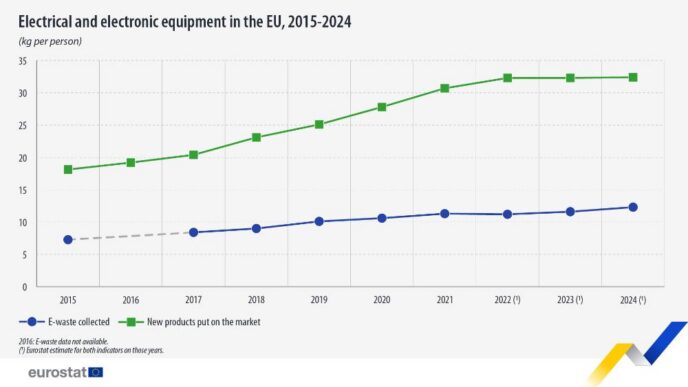


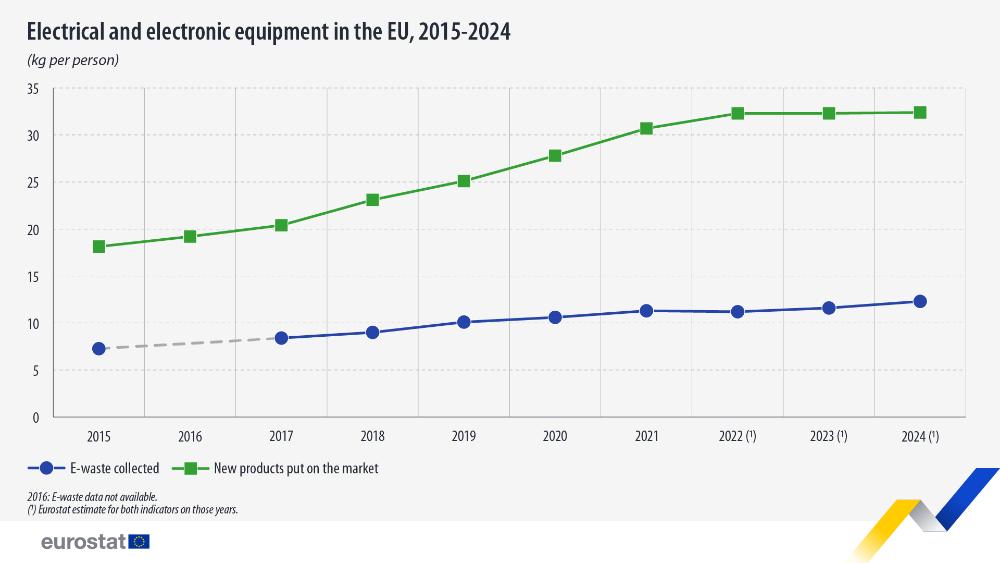
In 2024, 12.3 kg of electrical and electronic equipment waste (WEEE or e-waste) per person was collected in the EU. This compares to 32.4 kg of new electrical and electronic equipment (EEE; for example, household appliances, smartphones and computers) per person put on the EU market during the same year. This significant difference highlights an increase in the stock of EEE, either because they are still in use, awaiting disposal, being hoarded at home or lost to informal, unmonitored waste treatment.
Between 2015 and 2024, EEE placed on the market in the EU grew by 79%, from 18.1 kg per person in 2015 to 32.4 kg in 2024. The category of large equipment, such as washing machines, dish washing machines, and photovoltaic panels, was the main driver of this increase. Between 2022 and 2024, EEE per person remained almost stable.
On the other hand, e-waste collection has grown more slowly, rising from 7.3 kg per person in 2015 to 12.3 kg. Compared with 2023, this amount increased by 0.7 kg per person.
Source dataset: env_waseleeos
Which EU countries collect most e-waste?
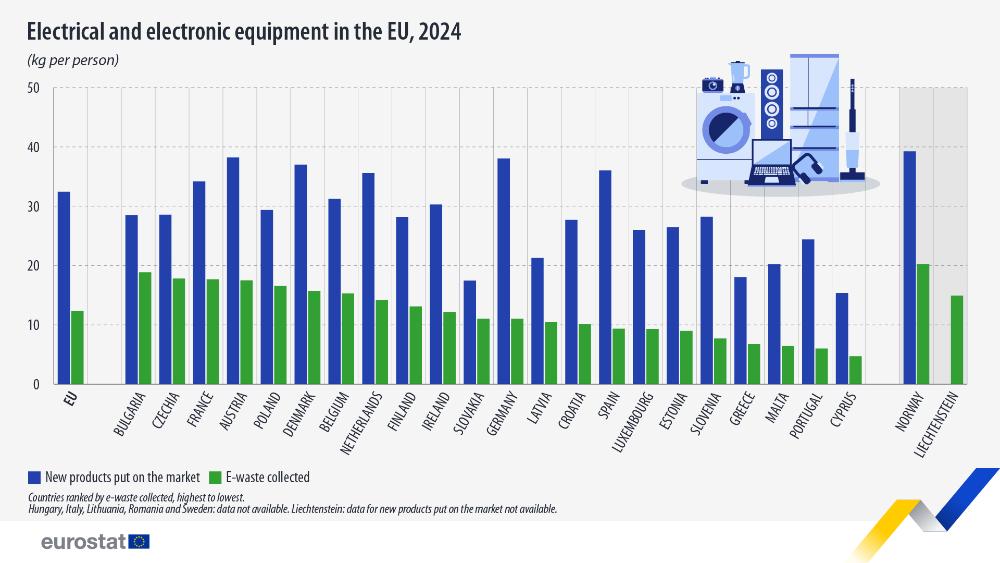
In 2024, Bulgaria (18.9 kg per person), Czechia (17.8 kg), and France (17.7 kg) collected the most e-waste, while Cyprus (4.7 kg), Portugal (6.0 kg), and Malta (6.4 kg) recorded the lowest amounts.
The country which placed the most EEE on the market was Austria (38.2 kg per person), followed by Germany (38.0 kg) and Denmark (37.0 kg). On the other hand, Cyprus put 15.4 kg of electronic equipment per person on the market. Slovakia (17.5 kg) and Greece (18.0 kg) also recorded low values.
Source dataset: env_waseleeos
Among all countries with available data, the weight of electronic products placed on the market in 2024 was higher than the weight of collected e-waste. Slovakia, however, registered the smallest difference per person (6.4 kg), while in Spain (36.0 kg vs 9.3 kg) and Germany (38.0 kg vs 11.0 kg) the weight of electronic products placed on the market was more than 3 times higher than that of collected as waste.