

AMR undermines the efficacy of antibiotics and is projected to cause 1.91 million global deaths annually by 2050. Tackling AMR is therefore a priority in the EU’s One Health approach, which seeks to balance and optimise the health of people, animals, and ecosystems as part of one integrated framework. ‘Wastewater-based surveillance’, or WBS, could play a part in this effort, according to a new review.
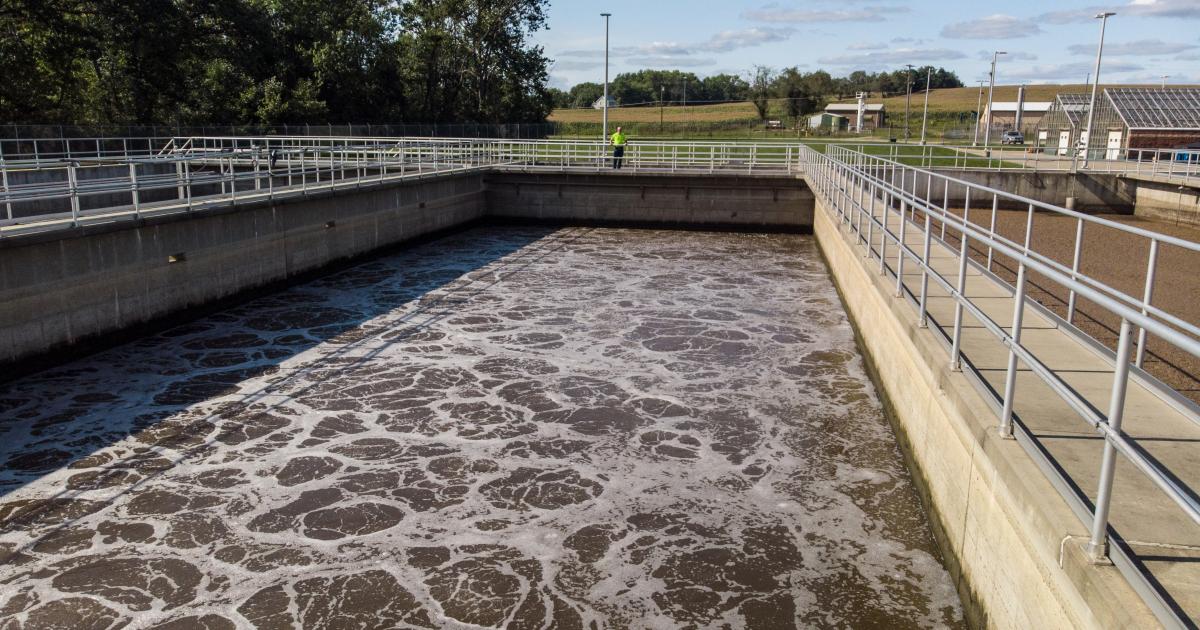
WBS was widely adopted during the COVID-19 pandemic, when it was used to track the virus in sewage, but remains a somewhat overlooked tool in relation to AMR. A perspective and review paper now discusses the applicability of WBS to AMR, highlighting its potential as a cost-effective way of mapping trends and dissemination pathways of antibiotic resistance genes (ARGs). As well as facilitating early warning and detection, this could allow a better understanding of the ecological and social drivers of their spread, says the researcher – key to effective policymaking and public health action.
There are strong associations between the abundance and diversity of ARGs and local socioeconomic, health, and environmental conditions such as sanitation infrastructure and access to clean water, finds the review. Studies also demonstrate regional variations in genetic profiles, with 49 common ARGs detected across diverse environments – and therefore conferring higher risk of both localised circulation and potential global dissemination. With this in mind, WBS is especially relevant in regions with inadequate sanitation, high levels of antibiotic pollution, and limited healthcare infrastructure. The methodology is adaptable, being applicable at scales from an individual building up to entire cities and can monitor sewage from diverse sources (e.g. hospitals, farms, pharmaceutical companies, municipal sources). However, implementation is most challenging in regions with inadequate sanitation, where non-sewered systems make sampling complicated.
WBS can identify environmental AMR hotspots and guide local interventions, for instance by informing healthcare prescribing to help mitigate localised hotspots of resistance, says the researcher. In order to be implemented effectively and return actionable insights, however, data must be collected consistently and systematically. It requires advanced genetic sequencing of ARGs and priority pathogens, large-scale mapping of genetic diversity within wastewater, and comparative analysis across regions (an emerging field known as wastewater-based epidemiology). This will require long-term investment and international coordination to ensure robust standardisation, transparent governance, and ethical data sharing.
The author of this new perspective paper, which synthesises recent evidence on WBS and AMR via literature review, identifies a number of key challenges, including:
- Technical limitations: Assigning specific ARGs to their hosts remains difficult, reducing the accuracy of risk assessment. Standardisation of sampling is also challenging.
- Ethical and privacy considerations: Despite filtering, personal information can emerge in raw datasets, especially in samples from small catchments.
- Infrastructure disparities: Centralised wastewater and sewered sanitation systems are not present everywhere, especially in low- and middle-income countries, potentially widening an already-present global surveillance gap.
- Environmental justice and climate vulnerability: Communities lacking proper sanitation face disproportionate risks of ARG exposure via contaminated water. They also often face a greater risk of climate-driven events (e.g. heatwaves, floods) that could accelerate gene transfer.
- Data interpretation and actionability: Genetic profiles are hugely complex, requiring large, integrated analytical frameworks that incorporate environmental, clinical, agricultural and pharmaceutical data – and these are yet to be developed.
Priorities for action include developing focused funding mechanisms and institutional actions that position WBS as an integral part of AMR monitoring; support for pilot projects in low-resource settings to demonstrate feasibility; development of robust global guidelines to address privacy, consent, data stewardship, and public reporting concerns; international standardisation of WBS data sampling, processing, sequencing and interpretation; and targeted investment in the technological innovation needed to make WBS feasible in diverse global settings.
The One Health approach should guide such efforts, says the researcher, to strengthen policy coherence across sectors – public health, veterinary medicine, environmental protection, agriculture – and assess the impact of existing AMR policies. WBS can be a robust tool for AMR surveillance, the review concludes. If effectively integrated into international strategy and long-term response planning, it could help mitigate emerging resistance – the spread of new ARGs into new genetic hosts and new regions – before the onset of a future AMR crisis.
Reference:
Balcázar, J. L. (2025) Could wastewater-based surveillance be key to combating antimicrobial resistance? mBio 16:e02778-25. https://doi.org/10.1128/mbio.02778-25
To cite this article/service:
“Science for Environment Policy”: European Commission DG Environment News Alert Service, edited by the Science Communication Unit, The University of the West of England, Bristol.
Notes on content:
The contents and views included in Science for Environment Policy are based on independent, peer reviewed research and do not necessarily reflect the position of the European Commission. Please note that this article is a summary of only one study. Other studies may come to other conclusions.