

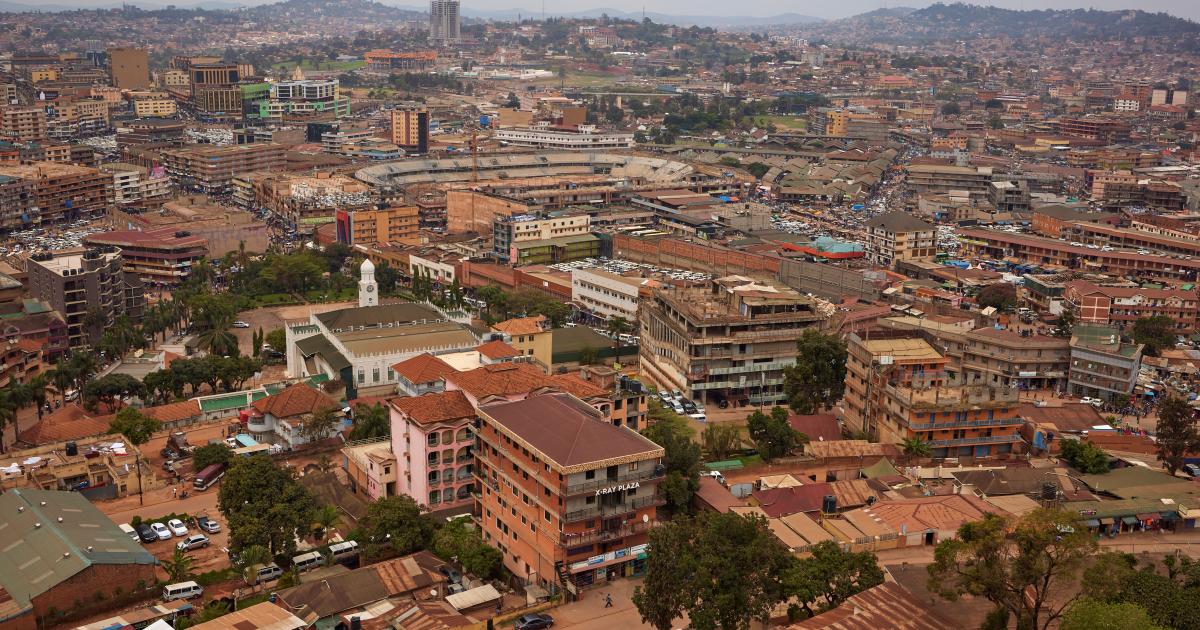
Millions of people live in buildings that were not designed for the climate conditions they face today and that are becoming warmer over time.
A new JRC study offers the first global mapping of areas where old and less compact buildings may have the highest energy demand for providing thermal comfort. This means that it increasingly takes more energy to heat, or cool buildings to be not only pleasant but also safe to live in as outside temperatures fall or rise to dangerous levels. The study finds that 48 million people live in such vulnerable areas.
By 2100, that figure could be two to three times higher as climate change shifts the burden toward the world’s warmest regions, which are also the most disadvantaged.
A global measure for climate vulnerability
The new study published today in Nature’s Scientific Reports, introduces a simplified concept of climatisation vulnerability, suitable for making global comparisons. A building’s age and shape, the main variables in the study, play a role in defining the energy it needs to offer comfortable living.
However, these are not the only factors. A buildings’ orientation, construction materials, and the local climate have a big impact in addition to the more obvious question of how efficient the building’s heating-cooling systems are. While it is currently too complicated to effectively take account these many aspects, JRC scientists have made a first attempt to model the complex energy needs and vulnerability of buildings. This focuses on a simplified model combining construction age, and shape of the building, with relevant climate data.
The older and less compact a building, the greater climate vulnerability
Using this model, JRC scientists identified vulnerable areas among more than 2 billion buildings globally. This mapping makes it possible to estimate where above-average energy demand takes place facing increasing temperatures, and to suggest where buildings may need urgent renovation to reduce their energy demand.
A less compact building has more of its surface exposed to weather conditions than a compact one, which means more heat escaping in winter and more entering in summer. The more surface exposed, the harder it is for buildings to maintain their temperature.
Although new buildings are not necessarily the most efficient, 43% of all buildings globally were built before 1980, when energy efficiency standards were, in general, scarce or non-existent. While traditional constructions may have used better quality materials, only towards the end of the century did energy efficiency become a requirement for new buildings.
Africa and South Asia have least compact buildings, Europe has the oldest
Compact buildings are the ones that minimise outdoor exposed surface in relation to conditioned volume. When assessing it a global scale, some contrasts emerge.
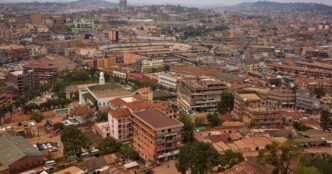
Compact buildings dominate dense urban centres in South Korea, the Persian Gulf, Japan and parts of Europe and the United States. Less compact, low-rise buildings prevail in Sub-Saharan Africa, South Asia, Latin America and the Middle East, where rapid, unplanned urbanisation has often resulted in lower energy efficiency.
The urban-rural contrast is also very distinct. In urban centres, more than 90% of built-up surfaces are compact. In low-density rural areas, that share drops to just 10%. It is here, in scattered, low-rise rural settlements in cold climates, that today’s thermal vulnerability is most concentrated. Lower energy standards and climate change are shifting this strain to low-income countries in hot climates.
Lower national income leads to higher climate vulnerability
If a building’s shape and age affect thermal vulnerability, a country’s income determines who can do something about it through renovation strategies. The data reveals a clear and growing disadvantage for low-income countries.
Only around 25% of low-income countries established minimum energy efficiency requirements for new and renovated buildings, compared to around 50% of upper-middle and high-income countries. Their buildings are also less compact, low-rise and more lightweight on average, making them more vulnerable to climate change.
Low and middle-income countries, excluding China, are projected to see a nearly 30% increase in energy demand over the next decade, with around three-quarters of this growth coming from burning fossil fuels.
Global findings, context-specific policy responses
This mapping guide policy decisions in reducing and coping with building vulnerability and planning climate‑resilient housing programs.
For high-income countries, which typically have many old and compact buildings, adaptation behaviours such as improving natural ventilation, alongside targeted renovations to upgrade windows and improve thermal insulation can significantly cut energy demand without complex structural works.
Rural areas may need a different approach, with insulation and solar energy production identified as priority measures.
In rapidly urbanising low-income regions, the priority shifts to getting new construction right from the start. Minimum compactness standards, higher thermal-mass construction, and passive ventilation design are some of the key levers to help reduce the rising cooling demand from air conditioning systems.
A follow up study with a focus on Europe will analyse more variables to bring more detailed insights to help better prepare for and respond to the increasing climate vulnerability of our buildings.
Background
The report’s estimates are based on data provided by the JRC’s Global Human Settlement Layer (GHSL), a component of the Copernicus Emergency Management Service (CEMS). Scientists combined satellite imagery with national census data to develop population density grids, and these grids are used to map settlement types, classifying them as cities, towns or rural regions.
JRC also developed projections of future urbanisation patterns based on the Degree of Urbanisation methodology, modelling which areas are most likely to attract new residents, based on historical trends, and distance to other settlements, roads, utilities, and other characteristics.
The Commission will propose an Integrated Framework for European Climate Resilience and Risk Management to help Member States prevent and prepare for the growing impacts of climate change. Climate adaption efforts will also be supported with common temperature reference scenarios and Digital tools including the European climate viewer and navigator.