

Why can geography be a transportation problem?
The Intergovernmental Panel on Climate Change (IPCC) has reported the passenger transport sector among the most concerning ones when it comes to meeting the CO2 reduction targets[1]. The sector is also systematically linked to challenges regarding geographic and demographic social exclusion, noise pollution, local emissions, safety, and the inherent health consequences[2]. Solving these challenges requires rethinking the current transport patterns and supporting a transformation towards sustainable mobility.
Urban areas have taken the lead in this change by renegotiating public space allocation to lower inner-city car use and promoting integrated multimodal transport strategies[3]. Nevertheless, as we move further away from these and towards rural areas, multimodal transport choices reduce substantially, leaving residents with one of three options:
- Rely heavily on privately owned cars to get to their daily activities and basic amenities.
- Run into a transport system that is inefficient, unreliable and lacks infrastructural and service connectivity.
- Risk social exclusion, due to the lack of mobility options connecting them to the closest urban centres.
Equitable access to sustainable transport options has been increasingly addressed in mobility planning and policymaking. Governments, transport planners and operators must involve the needs of vulnerable demographics[4] in these discussions, as these situations are often very specific and hinder the adoption of sustainable mobility[5]. This is the case for people living outside major urban areas, which, surprisingly enough, in 2021, accounted for more than 60% of the average EU population[6]. It is important to highlight that the lack of access to sustainable mobility options outside urban areas does not “only” stop at perpetuating social injustice and inequalities. In reality, this significant challenge leads to multiple interlinked consequences.
Beyond accessibility
The lack of transport in suburban and rural areas inevitably leads to worsening the effects of the associated local air pollution (NOx and PM2.5) and global emissions (CO2). Even if emissions in rural areas are not as high as in urban settings, while mobility policies and strategies are solely focused on higher population density areas, rural settings will never have the chance to reduce air pollution if access to shared and active transport is not provided and promoted. Moreover, if transport services are focused solely on improving accessibility in urban areas, local emissions might even increase, as people in rural areas will rely heavily on their private vehicles, parking them in peripheral or even city centres whenever they need to reach basic services or work.
In addition, given the current efforts in incentivising the switch from petrol and diesel-powered to electric vehicles. It is worth adding that if we disregard their lifecycle analysis, EVs will reduce CO2 tailpipe emissions, but these benefits are not entirely transferred to local air pollution. While NOx emissions could be reduced slightly, PM2.5 concentrations might even increase since it is mainly sourced from road abrasion, and brake and tyre wear, which will increase as vehicles get heavier with the added batteries. This could be especially problematic in rural areas where people may perceive the need for higher battery ranges for longer distances, leading to purchasing heavier EVs, such as SUVs.
Even though concentrations of NOx and PM2.5 have reduced in the past decade, research suggests that the health effects may persist at the current lowered levels, indicating there may be benefits in further reducing exposure to these pollutants[7]. In this context, the World Health Organization[8] has devised scientific and health-based targets for limiting the concentration of different air pollutants in the atmosphere, further determining their potential contribution towards respiratory diseases and even premature mortality. Hence, the challenges highlighted for emissions are carried over as consequences on society’s human health. One particularly concerning example is PM2.5, which results in worsening effects on premature mortality, hence by promoting privately owned EV vehicles for peripheral and rural areas, we might be contributing towards increasing the risk of all-cause mortality as opposed to reducing it.
Moreover, transport-associated human health concerns other areas such as the impacts of traffic collisions, and exercise, when active transport is encouraged. This is another area where users without adequate access to sustainable mobility modes outside urban areas will be at a disadvantage since statistically[9] switching to shared vehicles such as buses proves to have a lower number of deaths per person kilometre when compared to cars or motorcycles. This is further emphasised by other characteristics such as road conditions or visibility, which in rural areas are shown to be more dangerous compared to other road types[10]. Concerning the loss of the potential exercise benefits related to active travel, even in suburban and rural areas walking or cycling are usually used as last-mile solutions, and the associated benefits will be lost if the entirety of the journey is made using a privately owned vehicle.
The snowball effect continues into the economic impacts linked to emissions and human health. If the financial benefits associated with the increase of emissions in peripheral and rural areas might not be directly perceived by society, the extra costs concerning human health will. These could include medical bills related to respiratory and pulmonary diseases, and insurance or police costs associated with potential traffic collisions. Furthermore, providing sustainable transport options (e.g. buses) that are tailored to users’ mobility needs will provide them with opportunities to cut back on the operational (e.g. fuel), maintenance and driving costs (e.g. road taxes) associated with owning a private vehicle. These, calculated over a year, are usually higher than your average monthly pass.
It is worth acknowledging the economic investment required for shared and active mobility services, especially if these are to be implemented in peripheral and rural areas, where transport demand is more dynamic and, therefore, requires more flexible transport options. However, there is a discussion to be had regarding the potential to direct the savings from (1) reducing emissions, through schemes such as the EU ETS, and (2) improving human health, towards the provision or improvement of the required transport services in suburban and rural areas.
So, what can we do?
All the arguments presented above build a comprehensive case for the arguments in favour of providing citizens living in peripheral and rural areas with access to sustainable transport options. These arguments state the benefits and the required investments to achieve them. We require medium- and long-term strategic solutions focused on balancing the required modal shifts to active and shared transport while turning those vehicles into zero-emission vehicles. So, what can we, as a society do?
Civil society (communities, citizens) can advocate for equitable transport access by pushing a more equitable distribution of transportation resources in underserved communities in their local and regional governments. This can be achieved through the organisation of petitions, joining advocacy groups and organisations, or raising awareness about the urban-rural disparities in transport options, highlighting how it impacts access to jobs, healthcare, education and overall quality of life for areas outside urban settings. In addition, there are examples where rural areas have formed community-led initiatives to run transport services to address the lack of formal transit.
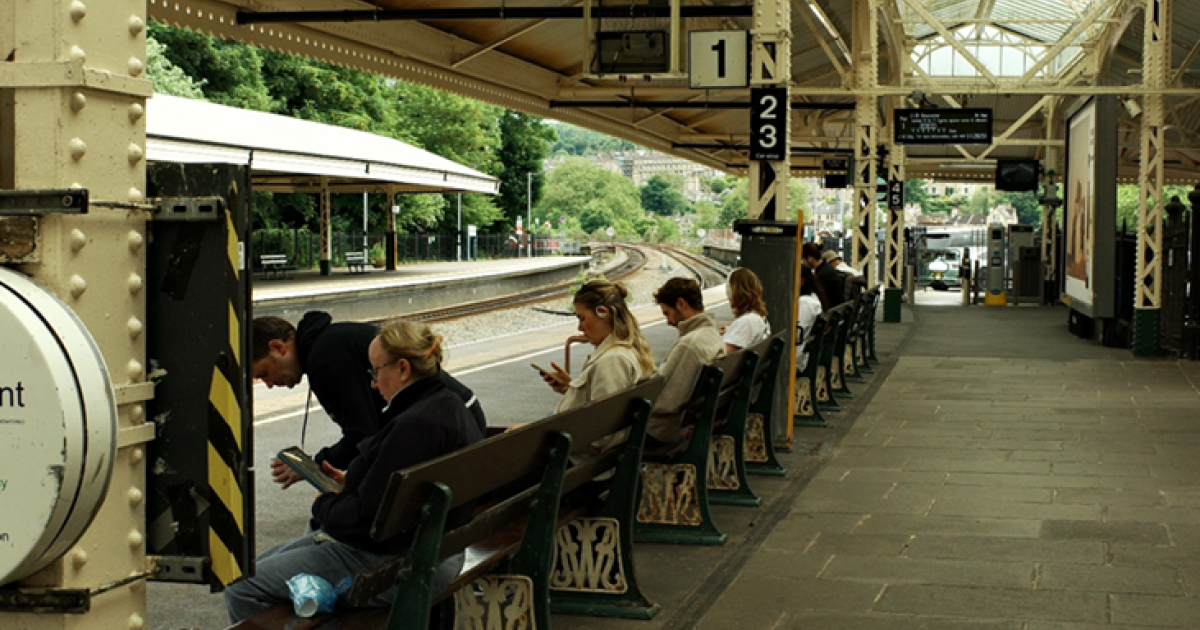
Governments (Local, Regional, National) are essential in designing policies that address the unique challenges suburban and rural communities are facing. For example, local governments can ensure funding is allocated specifically towards the development and deployment of sustainable transport alternatives in rural areas, such as demand-responsive transport (DRT) or electric vehicle subsidies for shared vehicles in rural households. This will require encouraging stronger regional collaboration between urban and rural planning to create transport links between these areas such as having an on-demand shuttle service taking rural residents to the nearest mobility hub located in a train station that would take passengers to the nearest urban centre.
Advocacy groups (NGOs, and transport and environmental organisations) are equally important as they can push governments to address the urban-rural disparities by advocating for investment in rural transportation infrastructure and public transportation options where feasible. These can further present and promote innovative low-cost solutions in rural areas, such as community-based transport services and rural bike-sharing schemes, and partner with these communities to co-design transportation services that are responsive to the specific needs of those populations. Moreover, these groups can run and elevate the reach of awareness campaigns that draw attention to the transportation inequalities between urban and rural areas, particularly the aforementioned consequences.
Academia (researchers, universities and think tanks) can conduct in-depth studies on the disparities in access to sustainable transportation between urban and rural areas providing data to guide policymakers and advocacy groups. Focusing on the social, economic and environmental consequences of these disparities will assist in providing evidence-based policy recommendations that address the different transportation needs of urban, peripheral and rural communities, ensuring sustainable alternatives are available to all. Secondly, these groups can investigate and propose innovative technologies and digital solutions that could work specifically for rural transport, such as electric community buses, ride-sharing apps tailored for rural citizens and autonomous vehicles.
Transport operators (public and private transport providers) work as the operational catapult to meet all the aforementioned requirements and policies. These stakeholders can explore ways to extend services to rural areas through partnerships or subsidised routes, including more frequent bus or train services connected to rural regions with urban job centres, or adopt more flexible transport service models such as ride-hailing or shared electric vehicles. Furthermore, these operators can develop seamless connections between urban, suburban, and rural transport systems, these could be either physical, such as mobility hubs, or digital, such as integrated ticketing systems.
[1] IPCC, Global Warming of 1.5°C: IPCC Special Report on Impacts of Global Warming of 1.5°C above Pre-industrial Levels in Context of Strengthening Response to Climate Change, Sustainable Development, and Efforts to Eradicate Poverty. Cambridge: Cambridge University Press, 2018. doi: DOI: 10.1017/9781009157940.
[2] G. Santos, H. Behrendt, L. Maconi, T. Shirvani, and A. Teytelboym, “Part I: Externalities and economic policies in road transport,” Research in Transportation Economics, vol. 28, no. 1, pp. 2–45, 2010, doi: https://doi.org/10.1016/j.retrec.2009.11.002.
[3] J. Schuppan, S. Kettner, A. Delatte, and O. Schwedes, “Urban Multimodal Travel Behaviour: Towards Mobility without a Private Car,” Transportation Research Procedia, vol. 4, pp. 553–556, 2014, doi: https://doi.org/10.1016/j.trpro.2014.11.042 .
[4] Including older persons, people with disabilities, low-income groups, and residents of urban peripheries, regional towns and remote areas.
[5] OECD/ITF (2024), Sustainable Accessibility for All, ITF Research Reports, OECD Publishing, Paris, https://doi.org/10.1787/5c91857c-en.
[6] Eurostat, JRC and European Commission Directorate-General for Regional Policy. https://ec.europa.eu/eurostat/statistics-explained/index.php?title=Urban-rural_Europe_-_introduction
[7] Festy, B. Review of evidence on health aspects of air pollution—REVIHAAP Project. Technical Report; World Health Organization: Copenhagen, Denmark, 2013; pp. 1–132.
[8] WHO. WHO Global Air Quality Guidelines. Particle Matter (PM2.5 and PM10), Ozone, Nitrogen Dioxide, Sulfur Dioxide and Carbon Monoxide; WHO: Geneva, Switzerland, 2021.
Author: Rita Filipe