

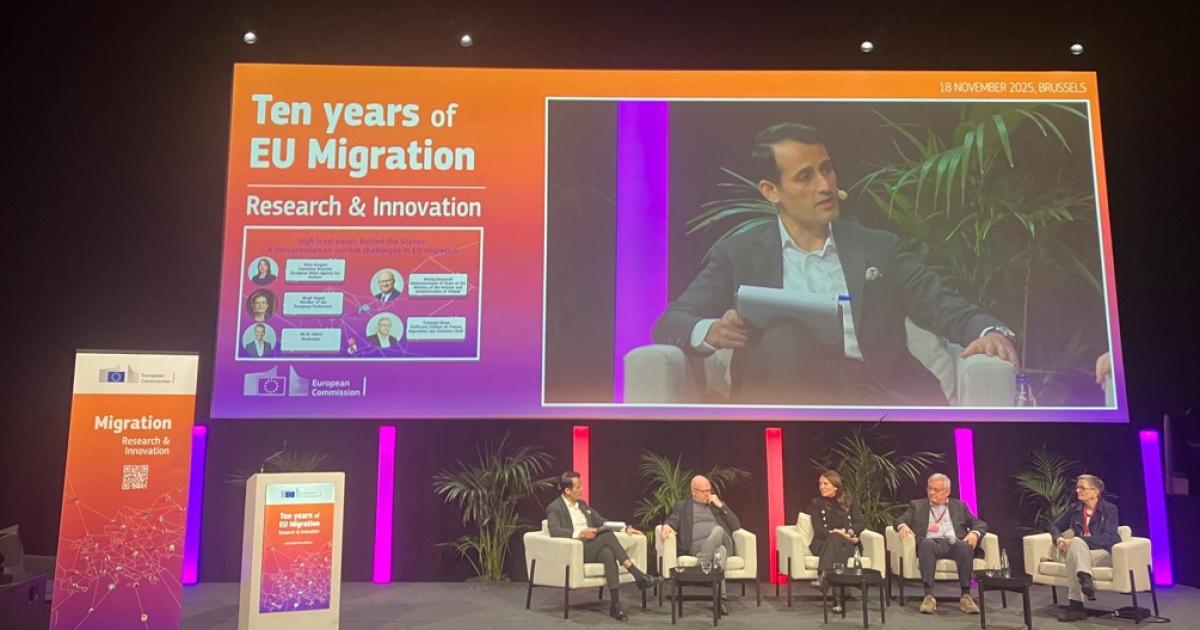
On 18 November, the European Commission celebrated ten years of EU-backed research and innovation in the field of migration. The conference Ten years of EU Migration Research and Innovation: Impacting Lives – Shaping the Future brought together leading experts in migration research, allowing them to reflect on a decade of significant progress and chart a course for the future.
Funded under the Horizon 2020 and Horizon Europe programmes, migration research in the EU has been crucial in exploring one of the most pressing global issues. With roughly EUR 160 million dedicated to migration-related research, and another EUR 300 million allocated to topics related to management of external borders, these frameworks have provided detailed insights into various aspects of migration.
Horizon: shaping the understanding and management of migration in the EU
Migration is a relatively new research area for the EU that has been growing in prominence since 1993. It was only under the Horizon 2020 programme that migration research took centre stage.
In 2015, EU Member States saw a significant rise in asylum seekers and legal migration, averaging about 2.5 million entries annually. Since then, irregular migration has significantly decreased. However, these new dynamics highlighted complexities in migration management, requiring a better understanding for improved governance.
After taking stock of the research needs emerging from these new challenges, the EU allocated over EUR 125 million to migration and mobility research, funding over 40 projects that covered a wide range of topics, including integration, migration governance, asylum and forced displacement, narratives and discourses, as well as migration forecasting.
From research to policymaking: key contributions
The large number of relevant research initiatives have significantly advanced understanding and policymaking related to migration. They have been instrumental in:
- Enhancing policy frameworks: These projects have refined EU migration policies, particularly in areas like labour market integration, access to rights and services, and educational support for migrant children, with projects such as Refuge-Ed, which improved educational and psychosocial support for refugee children, and EasyRights, which offers simplified access to public services through AI-driven solutions.
- Guiding crisis management and forecasting: Research has enhanced the EU’s ability to anticipate and manage migration trends and crises. The project Hummingbird, for instance, offers tools for accurate nowcasting and forecasting of migration trends, aiding in crisis response and management.
- Bridging the research-policy gap: Efforts are underway to ensure that research insights effectively inform policy. As an example, Innovate (MR2P Collaboratory) offers a platform fostering dialogue between researchers, policymakers, and stakeholders to ensure policies are research-backed and responsive to migration challenges.
- Influencing public discourse and perception: Projects such as Bridges, which evaluated the effectiveness of EU-funded information campaigns and promotion of inclusive storytelling, have provided empirical evidence to shape more balanced and informed public narratives about migration.
Numerous other projects focus on specific aspects of migration, such as child and youth inclusion (e.g., Child-Up, MiCreate), community and labour market integration (e.g., Spring, Sirius), and IT solutions for migrant integration (e.g., MIICT, Rebuild). All these initiatives contribute to a more comprehensive and evidence-based approach to addressing migration challenges within the EU.
Find out more
Research results informing migration policy in Europe: Insights and future direction