


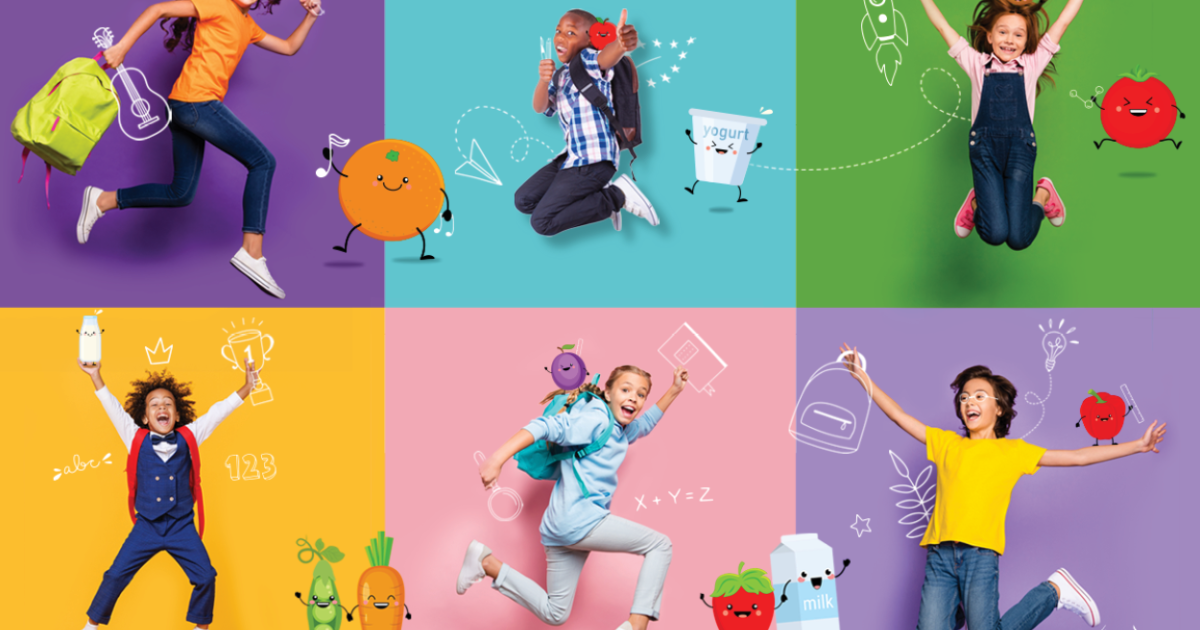
As children across Europe returned to school this September, the European Commission is helping put healthy food on the school agenda via the EU school scheme. The latest data show that one quarter of all children enrolled in nurseries, pre-primary, primary and secondary education1establishments participated in the scheme, with the majority (70.2%) attending primary schools. During the 2024/2025 school year, children in over 143 000 schools across the EU received 61 570 tonnes of fresh fruit and vegetables, 107 million litres of drinking milk, and 2 620 tonnes of cheese and curd.
The EU school scheme supports healthy eating habits and reconnect children with farming and the food they eat.
Children also participated in different educational activities, including visits to farms and school gardens: 1.3 million children visited farms or similar sites, while 2.8 million took part in school garden activities. A total of EUR 356 million was spent on the scheme in 2024/25, including EUR 188 million in EU contribution and EUR 168 million in national funding. National funding increased by around EUR 33 million compared with the previous school year, showing continued Member State investment in the scheme.
What’s next for the EU school scheme?
Given the success of the programme, the Commission has proposed continuing the EU school scheme for the next long-term EU budget, building on almost 50 years of support for healthy eating and stronger links between children and farming. The proposal keeps the scheme at the heart of efforts to improve children’s eating habits and reconnect them with agriculture, including through locally sourced products.
The new framework would give Member States more flexibility to tailor the scheme to their needs. This would allow national authorities to use EU funding more effectively while keeping the scheme focused on its core objectives. The proposal would also make the scheme simpler. It would make the EU school scheme mandatory, ensuring that EU funding is used for this purpose, while reducing the number of legislative acts and requirements needed to implement it. Finally, the next long-term EU budget would strengthen links between the EU school scheme and wider EU action on health, social policy and public procurement. Together, these changes would help the scheme continue to promote healthy eating, sustainable food consumption, organic farming, local food chains and action against food waste, while bringing children closer to the food and farming sector.
1 School year 2024/2025
Through the EU school scheme, we are ensuring that children across Europe get access to seasonal, high-quality food, and take part in activities that connect them to farming. Every fruit, vegetable or dairy product served, every farm visit and every school garden is an opportunity to reconnect children with agriculture and with the food they eat. It is our greatest bridge between children and farmers, cities and fields, and helps highlighting the multiple benefits our farmers bring to society every day.
That is why we want to ensure the continuation of our support for the EU school scheme, making it a mandatory part of national plans, while adapting to national realities.
Christophe HANSEN, European Commissioner for Agriculture and Food.