


n today’s complex global environment, science diplomacy is an increasingly important tool for fostering dialogue, building trust and strengthening international cooperation between the EU and countries worldwide.
A symposium taking place on 28 October at the Synchrotron-Light for Experimental Science and Applications in the Middle East (SESAME) in Jordan will explore the role of research and technology infrastructures in science diplomacy, by helping to build and sustain links between countries, even in case of political tensions.
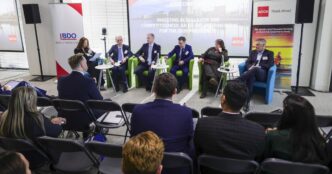
The event will bring together scientists, diplomats and other stakeholders from across the region and beyond for a series of sessions and keynote speeches. Participants will also hear from young researchers whose work provides concrete examples of the benefits research and technology infrastructures bring to international cooperation in research and innovation.
Speakers will include, inter alia:
- HRH Princess Sumaya bint El Hassan, President, Royal Scientific Society, Hashemite Kingdom of Jordan
- Azmi Mahafzah, Minister of Education and Human Resources Development, Hashemite Kingdom of Jordan
- Maria Cristina Russo, Deputy Director-General for Innovation, Prosperity and International Cooperation, DG Research & Innovation, European Commission
- Petra Kežman, Deputy Secretary-General, Union for the Mediterranean
- Khaled Toukan, Director, SESAME
- Robbert Dijkgraaf, President, International Science Council (ISC)
- Karen Hallberg, Secretary-General, Pugwash Conferences on Science and World Affairs
The one-day event is organised by the European Commission in cooperation with the United Nations Educational, Scientific and Cultural Organization (UNESCO), the Union for the Mediterranean (UfM), and the Synchrotron-light for Experimental Science and Applications in the Middle East (SESAME).
The SESAME facility in Allan, Jordan, is a real-world example of a research infrastructure that functions as a tool of science diplomacy. SESAME’s work combines scientific excellence with international cooperation with current members comprising Cyprus, Egypt, Iran, Israel, Jordan, Pakistan, Palestine* and Türkiye.
Registrations for the event have closed, but the event can be followed via web streaming on the conference website.
Background
The event is being organised in the context of the European Strategy on Research and Technology Infrastructures and the recently adopted EU Framework for Science Diplomacy. The framework sets out strategic, operational and enabling actions to be taken by Member States, as well as supporting actions to be delivered at EU level.
More information
* This designation shall not be construed as recognition of a State of Palestine and is without prejudice to the individual positions of the Member States on this issue.