

On World Sustainable Transport Day, most of the conversation will be about emissions, and rightly so. Transport accounts for about a quarter of the EU’s greenhouse gas emissions.1
Yet my years building mobility services at FlixBus and Easypark, as well as working on utility vehicle retrofit, have taught me something the climate debate often misses. A cleaner transport system is not automatically a fairer one.
If we design climate innovation for an average passenger who does not exist, we will simply electrify the exclusions we already have.
My argument in this post is that startups, investors and programme designers should treat the diversity of transport users as a design input from day one. It makes for better services, and it makes for better business.
Transport has never been a neutral system
Our networks reflect the needs of the people who planned them. A study by Ramboll covering seven capitals, including Berlin, Copenhagen and Stockholm, found that public transport and walking are women’s two main modes of travel.2
More women than men said the distance to a stop affects whether they travel, and more women reported fearing harassment linked to public transport.
The picture widens when you look at other groups. In 2024, 24 % of people aged 16 or over in the EU had a disability.3 On 1 January 2025, 22 % of people in the EU were aged 65 or over.4
These are not niche segments. They are a large share of the people every new mobility service claims to serve.
Barriers also overlap. Picture an older woman with reduced mobility living in a rural area. The last bus leaves before the end of the working day, her stop has no lighting, and the new shared mobility app asks for a smartphone and a credit card.
None of these barriers comes from her. Each one is a design decision someone made.
The same gap exists inside the sector
Who builds transport shapes who it serves. In 2021, women made up only 17 % of the six million people working in the EU transport sector.5
In my experience of selecting and mentoring mobility startups, first at Plug and Play and now through Intermobility, founding teams often mirror that workforce. That is not a criticism of any founder.
Teams often test products on people like themselves, and early users tend to be urban, young, digitally fluent and able-bodied. The result is products that work very well for some passengers and quietly fail others.
Building inclusion into Intermobility and the climate venture centre
Intermobility is a European network I cofounded that brings together transport operators, public transport authorities, manufacturers, fleet managers and mobility founders. With Greentech Alliance, we are now designing a climate venture centre: an accelerator for climate startups and a landing pad for startups from partner countries entering Europe.
We want inclusion written into how it works, not added afterwards. Three principles guide our design.
- Selection. Every startup applying will answer one question about inclusion, alongside questions about its climate impact: who might this product leave out, and how will you find out? We will not expect perfect answers, but we will expect the question to be taken seriously.
- Pilot testing with real users. Our pilots with operators and public transport authorities will include older persons, persons with reduced mobility, shift workers who travel at night and residents of rural areas. We will ask startups to report pilot data broken down by sex, age and disability status wherever possible, so that we see who a service actually reaches.
- Mentors and juries. A programme cannot ask founders to think about diverse users if its own mentors and selection panels all look alike. We are building a mentor pool that includes women leaders in transport and people with lived experience of reduced mobility.
This comes with real trade-offs. Early-stage startups have little time and money, and recruiting diverse test panels can be slow and expensive.
That is why we believe the programme itself, rather than each founder, should carry part of that cost, for example, by organising shared user panels with associations that represent these groups.
Inclusion is a growth strategy
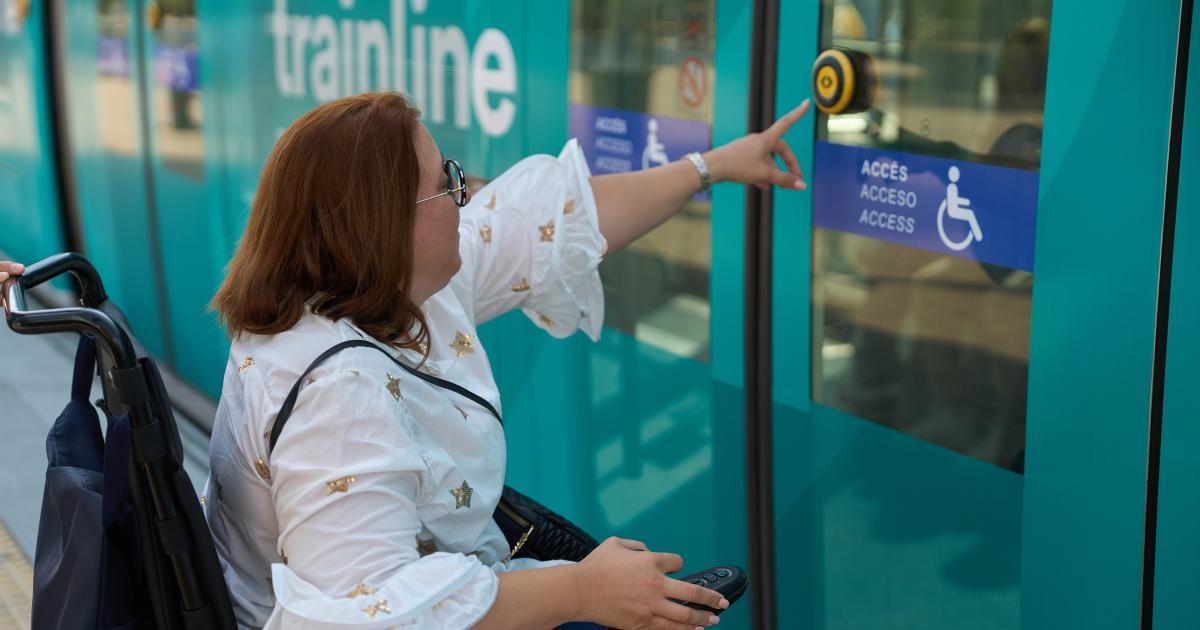
Designing for the passengers that are typically at the margins usually improves the service for everyone. Step-free access helps wheelchair users, but also parents with prams, travellers with luggage and delivery workers.
Well-lit stops and clear real-time information reassure people travelling alone at night, and they make the whole network more attractive.
For a climate startup, this matters commercially. The faster a low-carbon service is adopted by a broad public, the sooner it reaches the scale that public buyers and investors look for.
A product that only works for a narrow group of users will struggle to replace the car for everyone else, and replacing the car is the whole point.
What you can do, starting this week
If you fund or select startups, add one question to your evaluation grid: who does this product leave out, and how will the team know?
If you run a pilot, break down your user data by sex, age and disability status where feasible before you judge its success.
If you are a founder, test your next release with five people whose needs and experiences differ from those of your team, and include at least one older person or person with reduced mobility.
And if you lead a transport operator or public transport authority willing to host inclusive pilots, or you would like to mentor climate startups, I would be glad to hear from you.
Let us continue the conversation across the Ambassador Network using #DiversityInTransport.
Sustainable transport is only sustainable if everyone can use it.
1 European Commission, Sustainable and Smart Mobility Strategy: putting European transport on track for the future, COM(2020) 789 final, 9 December 2020.
2 Ramboll, Gender and (Smart) Mobility, as reported by the EU Urban Mobility Observatory, ‘Research tells how safety concerns impact women’s travel patterns’, 6 May 2021.
3 Eurostat, disability statistics, 2024 data, published July 2025, as presented by the Council of the EU, ‘Disability in the EU: facts and figures’.
4 Eurostat, ‘Population structure and ageing’, Statistics Explained, data extracted on 2 February 2026.
5 Eurostat, ‘Six million people working in EU transport in 2021’, 7 February 2023.
By François Hoehlinger, member of the Ambassadors for #DiversityInTransport Network and co-founder of Intermobility