

EBRD lends up to US$ 55 million to upgrade Jordan’s Shallala wastewater treatment plant
EU provides investment grant of up to €11.4 million; Canada and Spain fund technical cooperation and skills development through the HIPCA
Investment to improve wastewater treatment for up to 242,000 people, increase water reuse and generate renewable energy
The European Bank for Reconstruction and Development (EBRD) and the European Union (EU) are helping to strengthen Jordan’s water security by providing funds for the rehabilitation, upgrade and expansion of the Shallala wastewater treatment plant in northern Jordan.
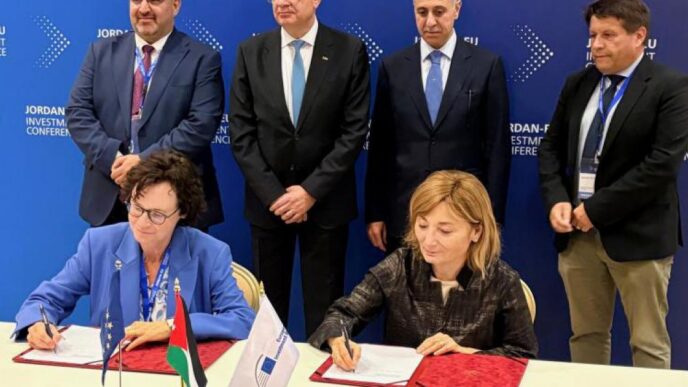
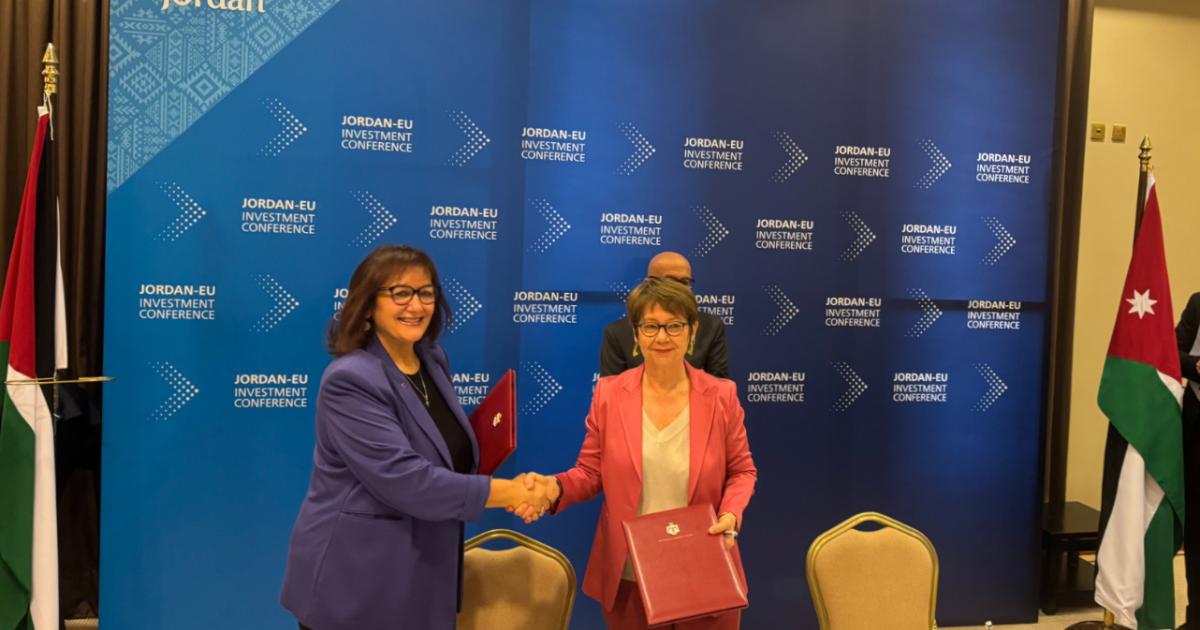
The new financing package will consist of an EBRD sovereign loan of up to US$ 55 million (€ 48.9 million) to the Water Authority of Jordan (WAJ), complemented by an investment grant of up to €11.4 million from the EU through its Neighbourhood Investment Platform. The financing agreement was signed at the Jordan–EU Investment Conference.
The investment will finance a new treatment line, the rehabilitation of existing facilities, improvements to sludge management and the restoration of compliance with national wastewater discharge and reuse standards. Construction will be phased to ensure uninterrupted wastewater services throughout implementation.
Once completed, the upgraded plant will treat approximately 11 million m³ of wastewater annually for agricultural reuse, helping to conserve scarce freshwater resources for municipal use while improving environmental conditions and reducing public-health risks in northern Jordan.
The upgraded facility will increase treatment capacity to 30,500 m³ per day, meeting the wastewater treatment needs of up to 242,000 people through 2050.
The investment will also go towards recommissioning the plant’s biogas recovery facility, generating approximately 4,000 MWh of renewable energy each year. These improvements are expected to enhance energy efficiency and reduce annual carbon dioxide emissions by around 2,000 tonnes.
The WAJ will also benefit from a comprehensive technical cooperation package at the facility, including project implementation support for effective construction and delivery, and support for human capital development in the form of a new internship programme with two Jordanian universities, financed by Canada and Spain through the High-Impact Partnership on Climate Action (HIPCA). EBRD-funded economic governance policy engagement with the WAJ will strengthen operations, performance monitoring and oversight arrangements for the Yarmouk Water Company.
EBRD President, Odile Renaud-Basso said: “Water security is one of Jordan’s most pressing development challenges. Together with the EU, we are investing in the expansion of the Shallala wastewater treatment plant to increase the safe reuse of water for agriculture, to reduce emissions and to strengthen the resilience of Jordan’s water sector. This project will help to safeguard scarce water resources while delivering long-term benefits for communities, the environment and the economy.”
European Commissioner for the Mediterranean Dubravka Suiča said: “Water security is essential to Jordan’s future. I’m proud that the European Union and the EBRD are working with Jordan to upgrade the Wadi Shallalah wastewater treatment plant. Once upgraded, the plant is expected to produce around 8.1 million cubic metres of treated water a year that could be reused in agriculture. That means less pressure on Jordan’s scarce freshwater supplies and more water available to the farming communities that need it.”
The EBRD and the EU have long partnered in Jordan, supporting investments in wastewater, solid waste management, sustainable energy, green finance and small-business development.
The EBRD began operating in Jordan in 2012 and has since invested more than €2.5 billion in 91 projects across the country, of which 75 per cent have been in the private sector.
The EBRD High-Impact Partnership on Climate Action (HIPCA) donors are Austria, Canada, Finland, Germany, the Netherlands, Norway, South Korea, Spain, Switzerland, the TaiwanICDF (International Cooperation and Development Fund), the United Kingdom and the United States of America.