


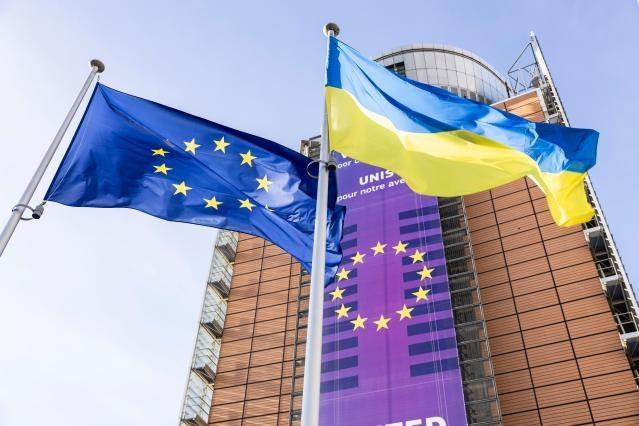
Today, the European Commission adopted a set of legislative proposals to provide up to €45 billion in additional financial support to Ukraine in 2027, helping to address the country’s estimated €70 billion financing gap for next year. These proposals follow the EU’s €90 billion Ukraine Support Loan for 2026 and 2027 and reaffirm the Union’s continued commitment to supporting Ukraine in the face of Russia’s ongoing war of aggression.
President Ursula von der Leyen said: “Europe will continue to ensure maximum support to Ukraine and maximum pressure on Russia. We have provided vital support to Ukraine throughout this war. And we will continue to help Ukraine protect its people and infrastructure from Russia’s attacks. And keep schools and hospitals open as Russia rains drones and missiles on Ukrainian cities. For 2026, Ukraine’s needs are covered. And today we are proposing a further €45 billion to cover two thirds of its needs for 2027. Together, with our international partners, we will strengthen Ukraine. For as long as it takes to achieve a just and lasting peace.”
The legislative package consists of:
- A proposal establishing an Instrument for Coordinated Support to Ukraine, providing a new loan of up to €45 billion to be financed by borrowing in capital markets.
- A proposal to amend the current Multiannual Financial Framework Regulation enabling the EU budget to guarantee the new loan.
- Incentives for international partners to provide additional financial support to Ukraine via proposals to amend the existing Ukraine Facility and the Ukraine Loan Cooperation Mechanism.
Predictable financial support for Ukraine in 2027
The proposed €45 billion support will take the form of a limited-recourse loan. This means that Ukraine will be required to repay the principal only once it receives reparations from Russia.
The proposed support would be structured in two components, with up to €25 billion allocated to military assistance and up to €20 billion provided as general budget support. The support will help Ukraine strengthen its defence capabilities, maintain essential public services and sustain its economic resilience. It will also support closer integration between Ukraine’s and Europe’s defence industries. The budget support will be conditional on Ukraine pursuing reforms, including in the areas of rule of law and anti-corruption which are relevant for the implementation of the interim benchmarks under the Fundamentals Cluster.
The EU support to Ukraine will be financed through Union borrowing on capital markets. The new loan would be guaranteed by the EU budget headroom. The headroom guarantees the EU financial assistance programmes for Ukraine adopted since 2023 and provides a solid and cost-efficient backing for the loan.
Mobilising additional support from international partners
As in 2026, the EU proposes to cover around two-thirds of Ukraine’s urgent financing needs, while continued support from international partners will be essential to meet the remaining needs. To facilitate additional third-country contributions, the Commission is proposing two further amendments as part of the Instrument for Coordinated Support to Ukraine.
First, the Commission proposes to extend the possibilities for using future windfall profits generated by immobilised Russian sovereign assets. An amendment to the Ukraine Loan Cooperation Mechanism, would allow these revenues, once the repayment of the previous G7-backed loans disbursed under this instrument has been completed, to contribute to the repayment of new eligible loans provided by the EU and G7 partners. This would also allow future windfall profits from immobilised Russian assets to contribute to the repayment of the proposed €45 billion loan and the existing €90 billion Ukraine Support Loan, without changing the principle that Ukraine would only be required to repay the principal once it receives reparations from Russia.
Second, the Commission proposes a new mechanism to facilitate additional EU lending to Ukraine fully backed by guarantees from third countries. Up to €5 billion in additional EU loans can be implemented through the Ukraine Facility with the financial backing of AAA/Aaa-rated third countries. This would allow international partners to support Ukraine through the EU’s well-established borrowing capacity and delivery programmes with strong safeguards for the Union budget.
The EU maintains its position that Russia must be held accountable for the damage caused by its war of aggression against Ukraine. The Union reserves its right to use immobilised Russian assets to repay the loans, in full accordance with EU and international law.
Next steps
The legislative proposals will now be submitted to the European Parliament and the Council for consideration and adoption in accordance with the applicable legislative procedures.
The Commission will work closely with the co-legislators and Member States to ensure that the necessary arrangements are in place to provide Ukraine with timely and predictable financial support in 2027.
Background
Since the start of Russia’s war of aggression against Ukraine, the EU and its Member States have provided nearly €238 billion in overall support to Ukraine and Ukrainians, – more than anyone else. For 2027, the Commission will disburse the remaining €45 billion available under the Ukraine Support Loan for defence and budget subject to the completion of the agreed reforms and fulfilment of policy conditions. On top of this, the new support package of up to €45 billion will cover two thirds of Ukraine’s additional financing needs for next year. The remaining one third will need to come from continued, coordinated support by international partners, including timely delivery on the commitments made by the G7 and other partners.
For more information
Quote(s)
Europe will continue to ensure maximum support to Ukraine and maximum pressure on Russia. We have provided vital support to Ukraine throughout this war. And we will continue to help Ukraine protect its people and infrastructure from Russia’s attacks. And keep schools and hospitals open as Russia rains drones and missiles on Ukrainian cities. For 2026, Ukraine’s needs are covered. And today we are proposing a further €45 billion to cover two thirds of its needs for 2027. Together, with our international partners, we will strengthen Ukraine. For as long as it takes to achieve a just and lasting peace.
Ursula von der Leyen, President of the European Commission
The EU’s financial support for Ukraine is about more than solidarity. Every euro we provide is an investment in Europe’s own security. It gives a crucial partner the means to keep defending Europe’s frontline against intensified Russian aggression that threatens our citizens, our territory and our way of life. That is why today’s proposal is not just the right thing to do, it is the smart thing to do. Our support comes with strict conditions that strengthen Ukraine’s economy and institutions, paving its path to EU membership. The EU is living up to its responsibilities. Ukraine’s other international partners must now follow suit.
Valdis Dombrovskis, Commissioner for Economy and Productivity; Implementation and Simplification
Europe stands with Ukraine and Ukraine will prevail. The additional €25 billion for defence announced today come on top of the €60 billion for defence under the Ukraine Support Loan. These funds are crucial for Ukraine to sustain its defence throughout 2027, including with air defence capabilities, drone and counter drone systems, missiles and ammunition. We will also accelerate the development of joint capabilities with Ukraine, which is essential for Europe’s defence readiness and security.
Andrius Kubilius, Commissioner for Defence and Space
For nearly five years, Russia has tried to break Ukraine’s spirit. But the Ukrainian people have shown extraordinary resilience. As another difficult winter approaches, our message is clear: Ukraine is not alone, and its future lies in the EU. With an additional €45 billion in support for 2027, Europe is delivering on its commitments. We are also working closely with our international partners, who can now contribute through new financing mechanisms. Our support will remain tied to reforms, particularly on the rule of law and the fight against corruption, because strong institutions are essential to Ukraine’s European future. And as Ukraine delivers on key reforms, including the interim benchmarks, we are also accelerating its gradual integration into our Union. This is.an investment in our collective security, Europe’s strategic autonomy and the strength and resilience of our Union.
Marta Kos, Commissioner for Enlargement