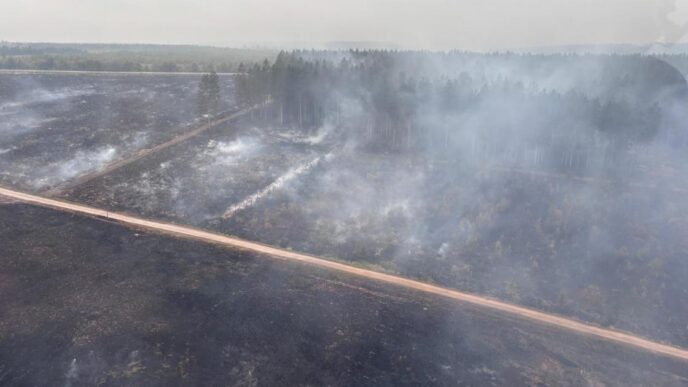


Global temperatures have risen significantly in recent decades, especially in the Arctic, where warming is occurring at a rate four times the global average. At high altitudes and latitudes, short growing seasons used to limit plant growth, but rising temperatures may allow boreal forests to expand into new regions of alpine and Arctic tundra.
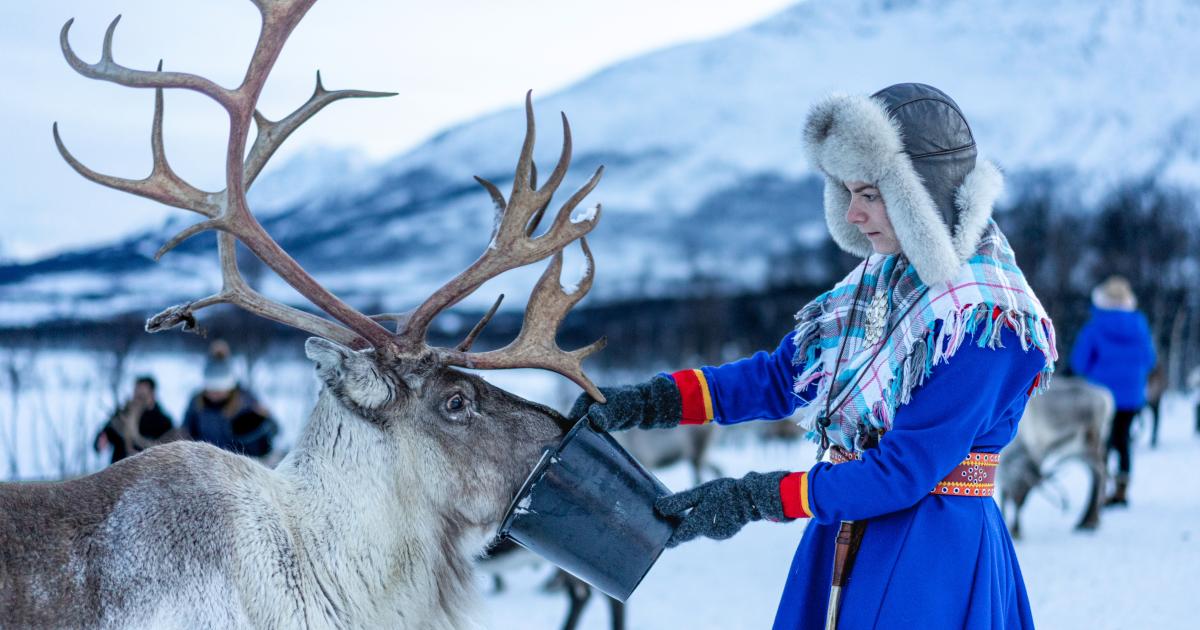
Tundra is a unique natural habitat characterised by vegetation overlying permafrost; it is protected by the EU Habitats Directive, which aims to protect the wild and characteristic flora and fauna of Europe. Arctic tundra can be found in – among other regions – Norway, Sweden, and Finland, where the most common large grazing herbivore is the reindeer. Populations of this species have declined in recent decades, with reindeer herding practices – by the indigenous Sami people, whose access to grazing grounds and rights to participate in land management decisions are established in the UN International Covenant on Economic, Social and Cultural Rights – also impacted by excessive forest exploitation, mining, and climate change.
Research indicates that herbivore grazing could prevent treelines from encroaching on tundra. To quantify this effect, a study compared the effects of managed high and low reindeer grazing densities on the birch forest treeline on two adjacent pieces of land either side of a fence along the Finland-Norway border. In Northern Finland (Käsivarsi herding district) a high reindeer density grazing regime has been in place for twenty years (1.9 to 2.8 recorded reindeer per km2 from years 2000–2022), whilst a low reindeer density regime is in place in Northern Norway (Bassevuovdi herding district; 0.8 to 1.6 recorded reindeer per km2 from 2000–2022).
Ten 150-metre-long lines (transects) were placed upslope across the study area, extending 50 m down into the forest and 100 m up into the tundra. All birch trees within 2 m on either side of the transect were recorded, and cores and leaf samples were taken from three selected trees along each transect. Piles of reindeer dung were counted within 1 m of either side of each transect. Four 25 m2 vegetation plots were placed at 50 m intervals along each transect; in each plot the proportion of cover by different types of plants and other ground cover was estimated by eye. Soil was sampled from the four corners of each plot.
Fewer mountain birch saplings and adult trees were found across the higher reindeer density area, whilst birch trees were found encroaching into the tundra under low reindeer density, suggesting that reindeer browsing prevented the establishment of seedlings and saplings which would have likely resulted in forest expansion and treeline advance. The authors say that this indicates the ability of large herbivores, if present at sufficient densities, to counteract climate-driven treeline advance by keeping the treeline in a ‘browsing trap’.
The researchers also noted changes in vegetation: grass-like ‘graminoids’ were more common in the high reindeer density area, probably due to the presence of natural fertiliser (reindeer dung), which could have implications for ecosystem functioning. Salix shrubs were more common in the low reindeer density area, probably because they had not been eaten by the reindeer. Regarding ecosystem functioning, although the authors found the birch leaves in the high reindeer density area to be enriched with nitrogen (probably due to fast nutrient uptake), they found no differences in soil nutrient composition between the two areas. However, the authors acknowledge that two decades of high-density grazing may not be enough time for the full impacts on soil to be seen.
This study supports the use of reindeer grazing as a climate adaptation tool for the preservation of threatened mountain tundra in Fennoscandia. The researchers highlight the importance of protecting wild reindeer populations, the continuation of access to grazing grounds, and the participation of reindeer herders in decision-making so that reindeer browsing can continue to prevent treeline encroachment of the Arctic tundra.
Reference: Hagenberg, L.W.C., Horstkotte, T., Pijcke, F., Abderhalden, B.L., Olofsson, J. and Siewert, M.B. (2025) Semi-domesticated Reindeer Inhibit the Recruitment and Expansion of Mountain Birch at the Fennoscandian Treeline. Ecosystems 28 (75): 1-15. https://doi.org/10.1007/s10021-025-01025-z
To cite this article/service:
“Science for Environment Policy”: European Commission DG Environment News Alert Service, edited by the Science Communication Unit, The University of the West of England, Bristol.
Notes on content:
The contents and views included in Science for Environment Policy are based on independent, peer reviewed research and do not necessarily reflect the position of the European Commission. Please note that this article is a summary of only one study. Other studies may come to other conclusions.