

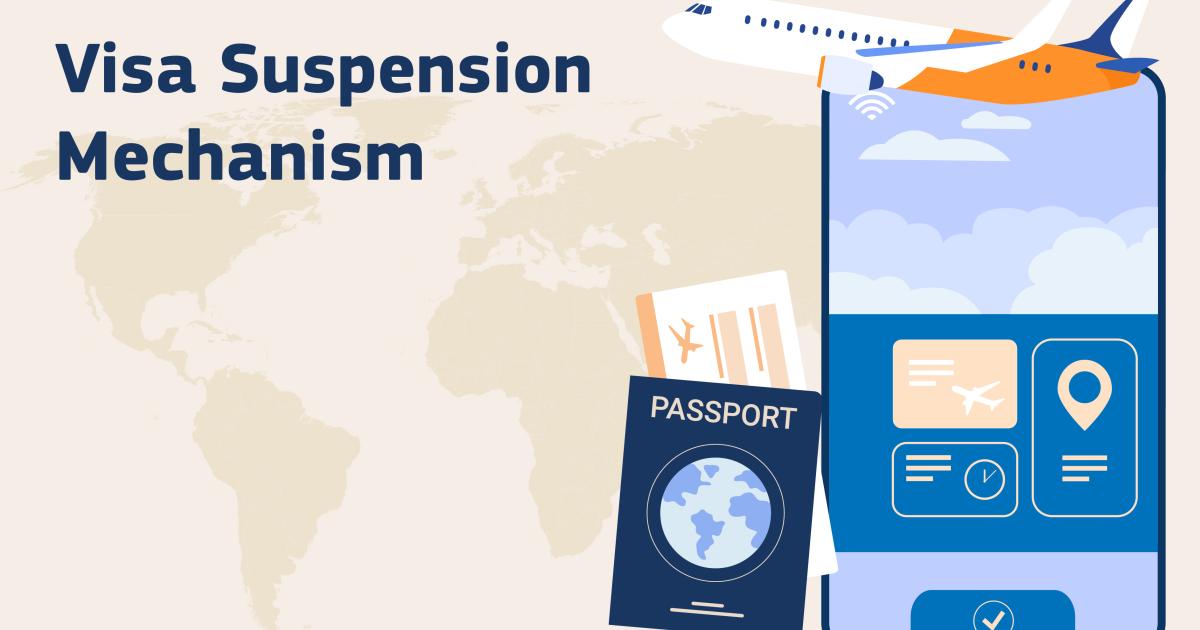
On 17 June, the European Parliament and the Council reached the provisional political agreement on the revision of the visa suspension mechanism, proposed by the Commission in October 2023.
Visa-free travel is a key pillar of the Schengen area, bringing economic and societal benefits to Europe. At the same time, the evolving geopolitical context has brought new challenges linked to visa-free travel. These include increased irregular arrivals due to the lack of alignment with the EU’s visa policy, investor citizenship schemes in visa-free countries, or hybrid threats, such as state-sponsored instrumentalisation of migrants. The new rules will allow for swifter and more decisive action to address these challenges.
The revised rules include:
- New grounds to suspend visa-free regimes: it will be possible to trigger the visa suspension mechanism not only in case of sudden and substantial increase in irregular migration, lack of readmission cooperation, or security risks, but also in cases of insufficient alignment with the EU’s visa policy, hybrid threats, the operation of investor citizenship schemes, and the deterioration of the external relations between the EU and visa-free non-EU countries;
- Lower thresholds to trigger the suspension mechanism, to make it easier to act in cases of misuse of visa- free arrangements;
- A swifter and more flexible procedure, to react faster in case of need (for instance in case of security threats or a high increase in arrivals), and to allow more time for remedial actions by the partner country;
- Stronger monitoring and reporting obligations: The Commission will now report to the European Parliament and the Council on any visa-free countries where challenges are identified.
Next steps
The Regulation must now be formally adopted by the European Parliament and the Council before it enters into force, which will happen 20 days after publication in the Official Journal of the EU.
The EU currently has a visa-free regime with 60 non-EU countries. Nationals of these countries can enter the Schengen area for short stays of up to 90 days in any 180-day period without a visa.