

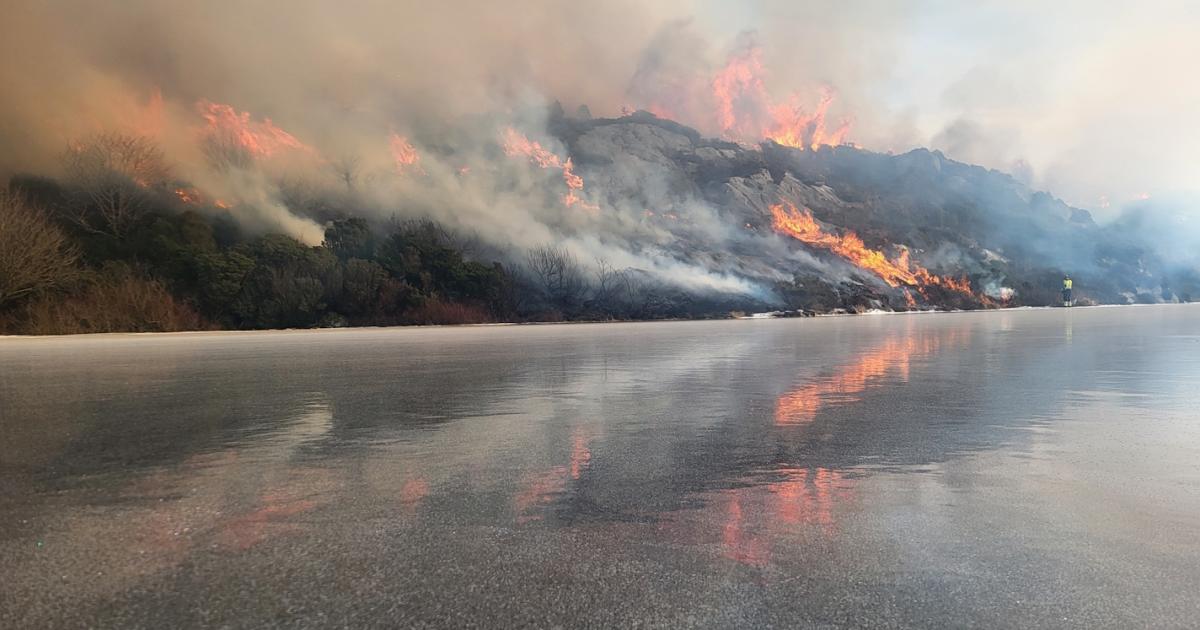
The 2025 fire season saw the largest burned area on record in the European Union. According to EFFIS, 1 079 538 hectares were burnt in the EU, more than twice the 18-year average of 364 885 hectares.
The season was largely determined within a few weeks. Extreme conditions in the first three weeks of August triggered major fires in the western Mediterranean region, which accounted for 52% of the EU’s total burned area. Spain and Portugal were especially affected, together making up 63% of the EU total.
Across the 46 countries and territories monitored by EFFIS in Europe, North Africa and the Middle East, 23 180 wildfires burnt 2 242 195 hectares. This was 20% more than in 2024 and nearly 2.5 times more than in 2023. Seven countries and territories registered their highest burned area on record, and some large fires occurred at higher latitudes than previously seen.
National reports reveal strong regional differences
According to data from the national fire services, the season developed very differently across Europe. In Spain, Portugal, Italy and Greece, there were fewer fires than usual, but they burnt much larger areas. In nine countries, including northern countries such as Germany, the Netherlands and Norway, both the number of fires and the burned area were above the ten-year average. By contrast, half of the reporting countries remained below average. Estonia, for example, recorded its quietest season since reporting began in 2000, following a wet spring and summer.
The reports also show that in north-western Europe the fire season started unusually early. The United Kingdom recorded 220 wildfires in March, the Netherlands reached its highest fire danger level by 5 April, and Sweden recorded high fire danger values as early as 3 April.
Background
Strong firefighting capabilities will remain essential as Europe’s wildfire threat grows. Through the EU Civil Protection Mechanism, 25 ground forest firefighting modules, with a total of 671 firefighters and 84 vehicles from 14 Member States, were prepositioned and engaged in fire suppression operations in Spain, Greece, France, Italy and Portugal in the summer of 2025.
The 26th annual report on forest fires in Europe, the Middle East and North Africa presents official fire data from 35 countries and territories and builds on the advance report released in March 2026, which provided a summary of the wildfire season based on EFFIS satellite-based data and analysis covering 46 countries and territories.
The report provides evidence for the Commission’s new strategy on integrated wildfire risk management, presented in March 2026. Combined satellite data and national authorities’ experience help improve prevention, plan firefighting capacity and prepare for future seasons.
EFFIS is run by the JRC, and it is a component of the Copernicus Emergency Management Service. It provides standardised wildfire data before, during and after fires for national authorities and EU institutions.
National figures may differ from those of EFFIS because countries and territories use different reporting methodologies and definitions. The EFFIS data presented in this article include all fires mapped by EFFIS, even those smaller than 30 hectares.
Related links
2026 Report on forest fires in Europe, the Middle East and North Africa
European Forest Fire Information System (EFFIS)
Current wildfire situation in Europe – Joint Research Centre
Wildfires – European Commission
Wildfires – European Civil Protection and Humanitarian Aid Operations